
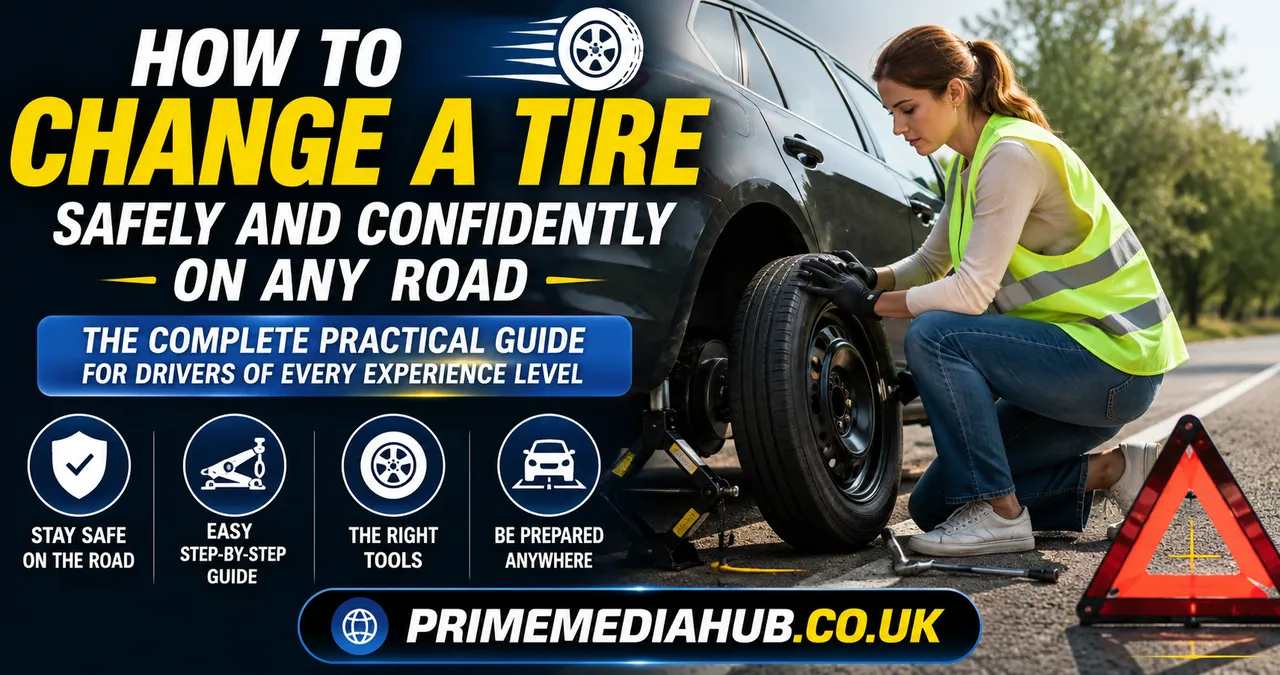
A flat tire has a way of turning an ordinary drive into a stressful situation. It can happen on a busy highway, in a parking lot, on a quiet neighborhood street, or during a long road trip far from home. While roadside assistance is helpful, every driver benefits from knowing how to handle a tire emergency independently. Understanding how to change a tire is one of the most practical automotive skills a person can learn.
The good news is that replacing a flat tire is usually much simpler than many people imagine. With the proper equipment, a safe location, and a clear process, most drivers can install a spare tire and continue their journey without major difficulty. Confidence comes from preparation, and preparation starts with understanding the entire process before an emergency occurs.
This comprehensive guide covers everything from safety precautions and essential tools to step-by-step tire replacement techniques, common mistakes, tire maintenance habits, and emergency readiness. Whether you are a new driver or someone who has never had to deal with a flat tire before, the information below provides a practical foundation that can serve you for years.
Why Tire Replacement Skills Matter for Every Driver
Vehicle technology has advanced dramatically over the years, but flat tires remain one of the most common roadside issues. Nails, road debris, potholes, damaged valve stems, worn tread, and sidewall impacts can all lead to sudden or gradual air loss. Even drivers who maintain their vehicles carefully may eventually encounter a flat.
Knowing how to change a tire offers more than convenience. It provides independence during unexpected situations and reduces reliance on immediate outside assistance. In remote locations, severe weather, or areas with limited cell service, the ability to replace a damaged tire can make a significant difference in safety and mobility.
Beyond the practical benefits, tire replacement knowledge helps drivers better understand their vehicles. Familiarity with wheel components, tire pressure requirements, jack points, lug nuts, and spare tire limitations encourages better vehicle maintenance habits overall. Drivers who understand these basics often become more attentive to tire condition and road safety.
Many professional mechanics emphasize preparation over reaction. As veteran automotive instructor Mark Reynolds once explained, “The best time to learn vehicle emergency skills is before you need them.” That principle applies perfectly to tire replacement. Learning the process in advance removes uncertainty when a real emergency occurs.
Understanding the Causes of Flat Tires
Flat tires occur for many reasons, and recognizing the most common causes can help drivers reduce the likelihood of experiencing one unexpectedly. Road hazards are among the leading contributors. Sharp objects such as nails, screws, glass fragments, and metal debris can puncture a tire and allow air to escape gradually or rapidly.
Potholes and rough road surfaces also create significant risks. A severe impact can damage the tire structure, bend a wheel rim, or cause a sidewall bulge. Sidewall damage is especially concerning because it often cannot be repaired safely and typically requires tire replacement.
Temperature changes influence tire pressure as well. Cold weather causes air to contract, while hot weather increases internal pressure. Tires that are already underinflated become more vulnerable to damage from road impacts and excessive heat buildup. Regular pressure checks are therefore an essential part of vehicle ownership.
Drivers learning how to change a tire often discover that many flats could have been prevented through routine inspections. Checking tread depth, looking for embedded objects, monitoring inflation levels, and replacing aging tires all contribute to safer driving and fewer roadside emergencies.
Tire age is another overlooked factor. Rubber compounds degrade over time, even when tread appears acceptable. Cracks, dry rot, and weakened structural integrity can increase the risk of tire failure. Manufacturers and tire professionals frequently recommend replacing tires according to age guidelines regardless of remaining tread depth.
Essential Tools and Equipment to Keep in Your Vehicle
Before learning how to change a tire, it is important to understand the tools required for the job. Most vehicles include basic equipment from the factory, though drivers should verify that these items are present and in good condition.
The spare tire is the most obvious requirement. Depending on the vehicle, this may be a full-size spare or a temporary compact spare often called a donut tire. Compact spares save space and weight but have speed and distance limitations that must be followed carefully.
A vehicle jack is necessary for lifting the car safely off the ground. Different vehicles use different jack designs, including scissor jacks, hydraulic bottle jacks, and floor jacks. The owner’s manual identifies approved lifting points and proper jack operation procedures.
A lug wrench is used to loosen and tighten wheel lug nuts. Many factory lug wrenches are compact and functional, though some drivers choose to carry a longer breaker bar for additional leverage. Wheel chocks are also valuable because they help prevent vehicle movement during tire replacement.
The table below summarizes useful roadside tire-changing equipment.
| Tool or Item | Purpose | Importance |
|---|---|---|
| Spare Tire | Replaces damaged tire | Essential |
| Vehicle Jack | Raises vehicle | Essential |
| Lug Wrench | Removes and installs lug nuts | Essential |
| Wheel Chocks | Prevents rolling | Highly Recommended |
| Flashlight | Improves visibility at night | Highly Recommended |
| Reflective Vest | Increases visibility to traffic | Highly Recommended |
| Tire Pressure Gauge | Checks inflation | Recommended |
| Work Gloves | Protects hands | Recommended |
| Portable Air Compressor | Inflates spare if needed | Recommended |
| Warning Triangles | Alerts approaching drivers | Recommended |
Additional items such as rain gear, a kneeling pad, and a reflective emergency kit can make the experience safer and more comfortable, particularly in poor weather conditions.
Safety Comes First Before Any Tire Change
Safety should always be the highest priority during a roadside tire replacement. A flat tire is inconvenient, but rushing into the repair process without considering surrounding conditions can create far greater hazards.
The first objective is finding a safe location. Move the vehicle away from active traffic whenever possible. A level parking lot, wide shoulder, rest area, or side street is generally preferable to a narrow highway shoulder. The flatter the surface, the more stable the vehicle will be when lifted.
Once stopped, activate hazard lights immediately. Hazard flashers increase visibility and alert nearby drivers that your vehicle is disabled. If available, place reflective warning triangles a safe distance behind the vehicle according to local safety recommendations.
Anyone learning how to change a tire should understand the importance of parking brake usage. Engaging the parking brake helps prevent unwanted vehicle movement while the wheel is removed. Vehicles with automatic transmissions should be placed in Park, while manual transmission vehicles should be left in gear.
Weather conditions also matter. Heavy rain, snow, ice, strong winds, or poor visibility can increase risk significantly. In some circumstances, remaining inside the vehicle and contacting roadside assistance may be safer than attempting a tire replacement near traffic.
Automotive safety consultant Daniel Carter summarized the issue well: “A successful tire change starts with choosing safety over speed. Five extra minutes spent creating a safe work area can prevent serious accidents.”
Preparing the Vehicle and Assessing the Situation
Before lifting the vehicle, take a few moments to evaluate the condition of the tire and surrounding area. A careful assessment often prevents mistakes later in the process.
Inspect the damaged tire visually. Determine whether the problem is a puncture, sidewall damage, blowout, or severe tread separation. While the cause does not usually affect the immediate replacement process, understanding the damage may influence future repair decisions.
Locate the spare tire and confirm that it is properly inflated. Unfortunately, many drivers discover too late that their spare tire has low pressure or is unusable. Checking the spare periodically before emergencies occur is one of the smartest maintenance habits a driver can adopt.
Review the owner’s manual if necessary. Modern vehicles sometimes have unique jacking points, wheel lock systems, or spare tire access procedures. The manual often contains diagrams and instructions specific to your vehicle model.
Drivers practicing how to change a tire should also organize tools before beginning. Place the jack, lug wrench, wheel chocks, gloves, and spare tire within easy reach. Having everything ready minimizes unnecessary movement and helps maintain focus throughout the process.
If wheel covers or hubcaps are present, determine whether they must be removed before accessing the lug nuts. Some designs allow direct access, while others require removal first. Completing this step before lifting the vehicle often makes the process easier.
The Complete Step-by-Step Process for Replacing a Flat Tire
Understanding how to change a tire becomes much easier when the process is broken into logical stages. Following a consistent sequence helps improve safety and efficiency.
Begin by securing the vehicle. Engage the parking brake, activate hazard lights, and place wheel chocks behind or in front of the tires that remain on the ground. Stability is essential before any lifting occurs.
Next, loosen the lug nuts slightly while the tire is still touching the ground. Do not remove them completely at this stage. Turning each lug nut counterclockwise by about a quarter turn is usually sufficient. The weight of the vehicle helps keep the wheel from rotating during this step.
Position the jack beneath the designated lifting point identified in the owner’s manual. Slowly raise the vehicle until the flat tire is several inches above the ground. Ensure the vehicle remains stable throughout the lifting process.
Remove the loosened lug nuts completely and place them in a secure location where they will not roll away. Carefully pull the damaged wheel straight toward you and set it aside.
Lift the spare tire and align its wheel holes with the wheel studs. Slide the spare fully onto the hub until it sits flush against the mounting surface. Install the lug nuts by hand and tighten them as much as possible.
Lower the vehicle gradually until the spare tire contacts the ground but still supports only part of the vehicle’s weight. Tighten the lug nuts using a crisscross or star pattern. This approach promotes even pressure distribution across the wheel.
Once the lug nuts are firmly tightened, lower the vehicle completely and remove the jack. Perform a final tightening check to ensure all lug nuts are secure. Store the damaged tire and tools before resuming travel.
Proper Lug Nut Handling and Wheel Installation Techniques
Many tire replacement problems stem not from the spare tire itself but from improper lug nut handling. These small components play a critical role in wheel security and should never be treated casually.
When learning how to change a tire, drivers often focus heavily on the jack and lifting process. While lifting is important, proper wheel installation deserves equal attention. Lug nuts must be tightened evenly to prevent wheel wobble, uneven pressure, and potential wheel damage.
The star-pattern tightening method is widely recommended by mechanics. Rather than moving sequentially around the wheel, alternate across the wheel face. This technique distributes force more evenly and helps seat the wheel correctly against the hub.
Hand-threading lug nuts before using the wrench is another important practice. Cross-threading can damage wheel studs and create expensive repair issues. If a lug nut does not turn easily by hand at first, remove it and realign it before trying again.
After driving a short distance on the spare tire, it is wise to recheck lug nut tightness when conditions permit. Some wheel assemblies settle slightly after installation. Confirming tightness provides additional peace of mind and enhances safety.
Professional technicians frequently use torque wrenches to achieve precise tightening specifications. While roadside situations do not always allow exact torque measurements, applying firm, even pressure using the correct pattern remains the best practical approach.
Installing and Driving on a Spare Tire Correctly
The job is not finished once the spare tire is mounted. Understanding spare tire limitations is an important part of safe vehicle operation after a tire replacement.
Drivers studying how to change a tire sometimes assume all spare tires function identically. In reality, temporary compact spares differ significantly from standard tires. These smaller emergency tires are designed only for short-term use until a permanent repair or replacement can be completed.
Most compact spare tires include maximum speed recommendations, commonly around 50 mph (80 km/h), though specifications vary by manufacturer. Exceeding these limits can increase wear, reduce handling performance, and create safety risks.
Distance limitations are equally important. Temporary spares are not intended for extended travel. They should be viewed as a means of reaching a repair facility rather than a permanent solution. Drivers should schedule tire service as soon as possible after installation.
Vehicle handling may feel different with a temporary spare. Braking characteristics, cornering behavior, and ride quality can change noticeably. Extra caution is therefore recommended, especially during adverse weather conditions.
Full-size spare tires generally offer greater flexibility and performance. However, they still require inspection to ensure proper inflation and compatibility with the vehicle’s wheel and tire specifications.
Tire Changes in Challenging Roadside Conditions
Not every flat tire occurs under ideal circumstances. Darkness, rain, snow, heat, and heavy traffic can complicate the replacement process significantly.
Nighttime tire changes require special attention to visibility. A high-quality flashlight or headlamp makes the work area easier to manage and reduces the chance of missing important details. Reflective clothing and warning devices become even more valuable after dark.
Rain presents another challenge. Wet surfaces can increase slipping hazards and reduce traction around the work area. Keeping waterproof gloves and a rain jacket in the vehicle can make roadside repairs far more manageable during storms.
Understanding how to change a tire in winter conditions requires additional caution. Ice and packed snow may compromise jack stability. Clearing snow from the lifting area and verifying firm jack placement are essential steps before raising the vehicle.
Highway environments deserve special consideration as well. Fast-moving traffic creates significant risk. If the shoulder is narrow or visibility is poor, contacting professional roadside assistance may be the safest choice.
Heat can be equally demanding. Summer pavement temperatures can become extremely high, making prolonged roadside work uncomfortable and potentially hazardous. Staying hydrated and working carefully helps maintain focus during hot-weather repairs.
Common Mistakes Drivers Make During Tire Replacement
Even relatively straightforward procedures can go wrong when important details are overlooked. Understanding common mistakes can help drivers avoid unnecessary complications.
One frequent error is failing to loosen lug nuts before lifting the vehicle. Attempting to break tight lug nuts loose while the wheel is suspended can cause wheel rotation and vehicle instability. Loosening them first makes the process far easier.
Another common issue involves incorrect jack placement. Every vehicle has designated lifting points engineered to support weight safely. Positioning the jack elsewhere can damage the vehicle or create dangerous instability.
People learning how to change a tire sometimes forget to engage the parking brake. This oversight increases the possibility of vehicle movement during the repair process. Even slight movement can compromise safety when a wheel has been removed.
Overtightening or unevenly tightening lug nuts is another concern. Excessive force can damage studs, while uneven tightening may affect wheel seating. Consistent pressure and proper tightening patterns help prevent these problems.
Neglecting spare tire pressure checks is also surprisingly common. A spare tire that has sat unused for years may have lost substantial air pressure. Routine inspections ensure the spare remains ready when needed.
Finally, some drivers continue using temporary spare tires far longer than intended. Compact spares are emergency equipment, not long-term replacements. Prompt tire repair or replacement remains essential.
Tire Maintenance Habits That Reduce Roadside Emergencies
While tire replacement skills are valuable, preventing flats whenever possible is even better. Regular maintenance significantly reduces the likelihood of unexpected tire failures.
Checking tire pressure monthly is among the most effective preventive measures. Proper inflation supports even tread wear, fuel efficiency, handling performance, and overall tire longevity. Many vehicles also include tire pressure monitoring systems, though manual verification remains beneficial.
Drivers who know how to change a tire often become more attentive to tire condition in general. Visual inspections can reveal embedded objects, sidewall cracks, uneven wear patterns, and other warning signs before they develop into major problems.
Tire rotation is another important maintenance practice. Rotating tires according to manufacturer recommendations promotes more uniform wear and helps maximize service life. Alignment checks also contribute to even tread wear and improved vehicle control.
Tread depth should be monitored regularly. Worn tires provide less traction in wet conditions and become more vulnerable to punctures and damage. Replacing tires before they become excessively worn enhances both safety and performance.
Maintaining appropriate load limits matters as well. Overloaded vehicles place additional stress on tires, increasing heat buildup and accelerating wear. Following manufacturer load recommendations helps protect tires and improve overall driving safety.
Building an Emergency Roadside Kit for Greater Preparedness
A well-equipped emergency kit transforms a stressful roadside event into a manageable inconvenience. Preparation provides both practical advantages and peace of mind.
Drivers should begin with the essentials: a functional spare tire, properly operating jack, lug wrench, flashlight, gloves, and reflective safety equipment. These items form the foundation of any roadside preparedness plan.
Understanding how to change a tire becomes far easier when quality tools are available. Factory equipment works adequately in many cases, but upgraded flashlights, sturdy gloves, portable air compressors, and reflective warning triangles can significantly improve the experience.
Seasonal considerations should influence emergency kit contents. Cold-weather kits may include blankets, hand warmers, and extra clothing. Warm-weather kits may emphasize water supplies, sun protection, and cooling accessories.
Basic first-aid supplies are also valuable additions. Minor cuts, scrapes, and abrasions can occur during roadside work. Having bandages and antiseptic supplies available supports safer emergency response.
Many experienced drivers keep a printed emergency contact list inside their vehicle. Cell phones are convenient, but battery failures and signal issues can occur unexpectedly. Backup contact information remains useful during emergencies.
Preparedness expert Laura Mitchell once remarked, “Emergency equipment earns its value on the day you need it, not the day you buy it.” That observation captures the importance of maintaining a complete and functional roadside kit.
Understanding Tire Repairs Versus Tire Replacement
Not every flat tire requires complete tire replacement. In many situations, a professional repair may restore safe operation and extend tire life.
Small tread-area punctures are often repairable when addressed promptly and correctly. Professional repair methods typically involve internal patch-plug combinations that seal the puncture effectively while maintaining structural integrity.
However, sidewall damage generally cannot be repaired safely. Sidewalls flex significantly during vehicle operation, making repairs unreliable in this area. Cuts, bulges, and severe sidewall punctures usually require tire replacement.
Drivers familiar with roadside emergencies and how to change a tire benefit from understanding these distinctions. A spare tire provides temporary mobility, but a professional inspection determines whether repair or replacement is the appropriate long-term solution.
Tire age, tread depth, and overall condition also influence repair decisions. A heavily worn tire nearing the end of its service life may not justify repair costs. In such cases, replacement often provides better value and safety.
Professional evaluation remains the best course of action after any significant tire damage. Technicians can assess internal tire structure, wheel condition, and overall safety considerations that may not be visible externally.
Conclusion
Every driver benefits from knowing how to change a tire, regardless of driving experience or vehicle type. Flat tires remain a common reality of vehicle ownership, and the ability to respond effectively can save time, reduce stress, and improve personal safety.
The process becomes far less intimidating when approached systematically. Safe vehicle positioning, proper tool usage, correct jack placement, careful wheel installation, and awareness of spare tire limitations all contribute to successful roadside tire replacement. Combined with regular tire maintenance and a well-stocked emergency kit, these skills help drivers remain prepared for unexpected situations.
Confidence on the road often comes from preparation rather than experience alone. By understanding the principles, techniques, and safety practices covered in this guide, drivers can handle tire emergencies more calmly and continue their journeys with greater peace of mind.
FAQ
How long does it usually take to change a flat tire?
For most drivers, replacing a flat tire takes between 15 and 30 minutes under normal conditions. The exact time depends on experience level, weather, traffic conditions, and how easily the lug nuts loosen. Familiarity with how to change a tire can significantly reduce the time required during an actual roadside emergency.
Can I drive long distances on a temporary spare tire?
Temporary spare tires are designed for short-term emergency use only. They typically have speed and distance limitations specified by the vehicle manufacturer. Drivers should arrange for tire repair or replacement as soon as practical rather than relying on a compact spare for extended travel.
What should I do if the lug nuts will not loosen?
If lug nuts are extremely tight, use controlled pressure and ensure the wrench is seated properly. Applying body weight carefully to the wrench may help. Avoid sudden impacts that could cause loss of balance. If the nuts remain stuck, professional roadside assistance may be necessary.
Is it safe to change a tire on the side of a highway?
Safety depends on traffic conditions, shoulder width, visibility, weather, and available space. If the location feels unsafe or traffic is passing very close to the vehicle, contacting roadside assistance may be the better choice. Personal safety should always take priority over convenience.
How often should I check my spare tire?
Checking spare tire pressure every month is a good practice. Many spare tires lose air gradually over time and are often overlooked during routine maintenance. A spare tire is only useful if it is properly inflated and ready for service.
Can a punctured tire always be repaired?
No. Small punctures in the tread area are often repairable, but sidewall damage, large punctures, severe wear, and structural damage frequently require tire replacement. A professional inspection is the safest way to determine whether a damaged tire can be repaired reliably.
What items should always be kept in a roadside emergency kit?
A practical emergency kit should include a spare tire, jack, lug wrench, flashlight, reflective safety gear, gloves, tire pressure gauge, warning triangles, and basic first-aid supplies. Additional seasonal items can improve preparedness during extreme weather conditions.