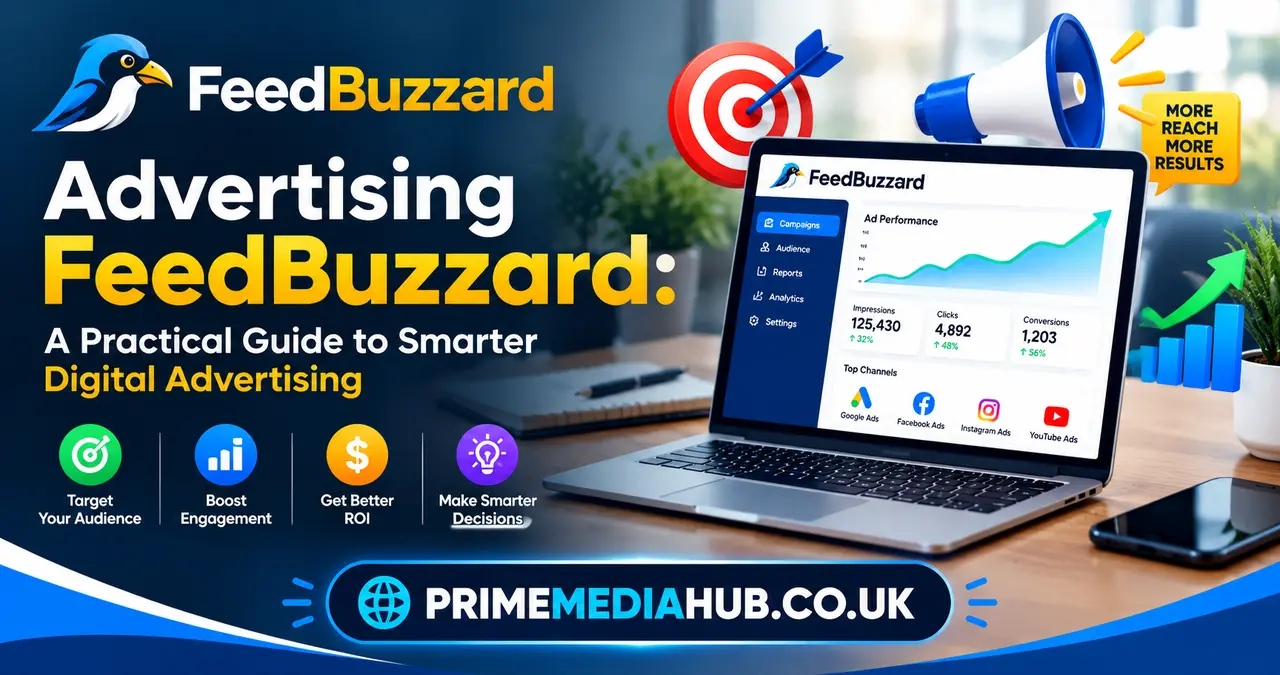
Digital advertising has changed dramatically as audiences have moved from traditional websites and search engines toward content feeds, recommendation systems, social platforms, mobile experiences, and personalized media environments. In this changing landscape, advertising feedbuzzard is a keyword that naturally connects the ideas of advertising, content distribution, audience discovery, and feed-based marketing. Understanding how these concepts work together can help marketers create campaigns that feel more relevant instead of simply adding another promotional message to an already crowded digital environment.
At its core, modern advertising is no longer only about placing an advertisement in front of as many people as possible. Successful advertising depends on context, timing, relevance, creative quality, audience intent, and the overall experience surrounding the message. When advertising appears inside or alongside a content feed, these factors become even more important because users are usually consuming information rather than actively looking for an advertisement. A useful approach therefore starts with understanding what people want to see, how they interact with content, and how promotional material can add value without interrupting their experience.
What Advertising FeedBuzzard Means in the Modern Marketing Landscape
The phrase advertising feedbuzzard can be understood as a search-oriented term connecting advertising with feed-based content discovery. A content feed is a continuously updated stream of articles, videos, posts, recommendations, products, or other media. Advertising within such an environment requires marketers to think differently from traditional banner advertising because the advertisement competes directly with editorial and user-generated content for attention.
A feed is usually designed around discovery. People scroll through it because they expect something interesting, useful, entertaining, or personally relevant to appear next. Advertising can work effectively in this setting when it follows the same basic principles. Instead of looking like an unrelated interruption, a well-designed promotional message can resemble the surrounding content in structure while remaining clearly identifiable as advertising. This balance between integration and transparency is one of the most important ideas connected with advertising feedbuzzard.
Another important element is personalization. Modern feeds often use signals such as previous interactions, content preferences, device behavior, location settings, or broad audience characteristics to determine what appears next. Advertisers can benefit from similar principles by creating different messages for different audience segments. Someone researching a product for the first time may need educational content, while someone who has already visited a product page may respond better to a comparison, demonstration, reminder, or offer.
The goal is not simply to increase the number of advertisements a person sees. Excessive exposure can create fatigue and reduce trust. The better objective is to make every promotional appearance more useful and more closely aligned with the user’s current interests.
Why Feed-Based Advertising Has Become So Important
People spend a significant amount of their digital time moving through continuously updated streams of information. Social networks, news applications, video services, shopping platforms, community websites, and recommendation engines all use some form of feed experience. This has created an advertising environment in which attention is captured through a sequence of small decisions rather than a single deliberate visit to a website.
Traditional advertising often assumes that the user is looking at a particular page and that the advertiser has a limited opportunity to capture attention. Feed-based advertising is different because the user is actively moving through a collection of content. The advertisement becomes one item among many. Its success depends on whether the creative can communicate value quickly enough to earn another moment of attention.
This makes advertising feedbuzzard relevant to marketers who want to understand how advertising and content discovery overlap. The most effective feed campaigns usually have a strong visual element, a clear message, a recognizable brand identity, and a reason for the audience to continue reading or watching.
Feed environments also create opportunities for storytelling. A single advertisement can introduce an idea, while subsequent pieces of content can explain benefits, answer questions, demonstrate a product, and eventually encourage an action. This approach is often more natural than attempting to communicate an entire sales pitch through one promotional unit.
“The strongest feed advertisement does not merely ask for attention; it gives the audience a reason to spend that attention.”
How Advertising FeedBuzzard Can Fit Into a Digital Strategy
A digital advertising strategy should never begin with the advertising placement itself. It should begin with a business objective. A company might want to increase awareness, generate qualified traffic, collect leads, encourage purchases, promote an application, build a subscriber base, or introduce a new product. The advertising format should then support that objective.
This principle is especially useful when thinking about advertising feedbuzzard because the feed environment can support several stages of the customer journey. Awareness campaigns can use visually strong creative to introduce a brand. Consideration campaigns can provide useful information. Conversion campaigns can present product benefits, testimonials, demonstrations, or calls to action.
The next step is audience definition. A campaign becomes easier to manage when marketers know exactly who they are trying to reach. Audience research can include demographic information, interests, search behavior, content consumption, previous interactions, and purchasing context. However, good targeting should not become so narrow that the campaign loses scale or excludes potential customers.
Creative strategy should follow audience understanding. A business selling professional software may use educational explanations, workflow demonstrations, or efficiency-focused messages. A lifestyle brand may rely more heavily on visual storytelling. A local business may emphasize convenience, location, availability, or community relevance. The same advertising system can therefore support very different creative approaches.
The final component is measurement. Before launching a campaign, marketers should define what success means. Clicks may matter for a traffic campaign, while qualified leads, completed purchases, repeat customers, or revenue may matter more for a performance campaign. Without a defined objective, it is easy to mistake activity for success.
Understanding the Relationship Between Content and Advertising
One of the biggest advantages of a feed environment is the relationship between content and advertising. Users generally enter a feed to consume content, not advertisements. That means the advertisement has to earn attention within an environment where educational, entertaining, and community-driven material may be competing for the same user.
This does not mean every advertisement needs to become a full article. Instead, the message should understand the expectations of the surrounding feed. If people are reading educational content, an advertisement offering a useful resource may feel appropriate. If they are browsing product recommendations, a product-focused message may feel more natural.
This principle is central to advertising feedbuzzard because content relevance can influence how users perceive a promotional message. Relevance does not mean disguising an advertisement as something else. It means making the promotional message useful within its context while clearly identifying its commercial nature.
Content quality also matters after the click. A beautiful advertisement that sends users to a confusing landing page creates a disconnect. The headline, visual message, offer, and landing page should tell a consistent story. If an advertisement promises a particular benefit but the destination page does not immediately explain that benefit, users may leave without taking action.
A strong campaign therefore considers the entire journey rather than treating the advertisement as an isolated asset.
Creating Effective Creative for Advertising FeedBuzzard
Creative is often the first thing users notice in a feed. This makes visual clarity particularly important. A successful advertisement should communicate its main idea quickly, even when someone sees it while casually scrolling.
The opening visual, headline, and supporting message should work together. A strong visual can create curiosity, but curiosity alone is not enough. The audience should quickly understand what is being offered and why it may matter to them. The brand should also be recognizable without overwhelming the main message.
When developing creative for advertising feedbuzzard, marketers should avoid unnecessary complexity. Too many messages can make a small advertising unit difficult to understand. One strong idea is usually easier to remember than several competing claims. The creative should also be designed for the specific device and placement where it will appear.
Video can be especially effective because movement can attract attention, but it should not be used simply because it is available. A short demonstration, product transformation, tutorial, customer story, or visual explanation may provide more value than decorative motion.
Copywriting deserves equal attention. A headline should make the benefit or idea clear. Supporting copy can explain the context. The call to action should tell users what they can do next. Good advertising copy avoids unnecessary jargon and focuses on the language the intended audience actually understands.
The Importance of Audience Intent
Audience intent is one of the most valuable concepts in digital marketing. Not every person who sees an advertisement is equally interested in the product. Some people may have never heard of the brand, while others may already be comparing products or preparing to purchase.
A campaign built around advertising feedbuzzard should account for these differences. People at the awareness stage generally need context. They may respond to educational content, brand introductions, problem-focused messaging, or broad benefits. People further along the journey may need more specific information such as pricing, comparisons, demonstrations, reviews, or guarantees.
This creates an opportunity for sequential advertising. Instead of showing exactly the same message repeatedly, marketers can change the communication based on previous engagement. Someone who watched an introductory video might later see a product demonstration. Someone who visited a pricing page could receive an advertisement highlighting implementation, support, or customer experiences.
Intent also affects the landing page. An awareness-focused advertisement may lead to a guide or educational resource, whereas a high-intent campaign may lead directly to a product or registration page. Matching the destination with the user’s mindset can improve the overall experience.
“Good targeting asks not only who the customer is, but also what the customer is trying to accomplish right now.”
Building a Strong Advertising Funnel
A marketing funnel is a useful way to understand how people move from initial awareness toward action. While real customer journeys are rarely perfectly linear, the funnel remains helpful for organizing messages and measuring different objectives.
At the awareness stage, the main objective is recognition. Advertising should explain what the company offers and why the audience might care. The message does not necessarily need to push for an immediate sale. A memorable introduction can be more valuable when the audience has little previous knowledge of the brand.
At the consideration stage, users are looking for evidence. They may compare alternatives, investigate features, read reviews, or explore pricing. This is where detailed content, demonstrations, case studies, comparisons, and frequently asked questions can become powerful advertising assets.
At the conversion stage, friction becomes particularly important. Users may hesitate because of price, complexity, uncertainty, lack of trust, or unclear next steps. Advertising can address these concerns by explaining the process, showing proof, highlighting relevant benefits, or making the next action simple.
After conversion, advertising can support retention and advocacy. Existing customers may respond to complementary products, educational material, loyalty programs, upgrades, or referral opportunities. This broader perspective makes advertising feedbuzzard part of a complete customer communication strategy rather than a single campaign tactic.
Measuring Advertising Performance Correctly
Measurement is essential because impressions and clicks alone do not explain whether advertising is creating meaningful business value. Different campaigns require different performance indicators.
For awareness campaigns, reach, frequency, video completion, brand searches, and engagement can provide useful information. For traffic campaigns, click-through behavior and landing-page engagement may matter more. For lead-generation campaigns, marketers should pay attention to lead quality rather than simply counting every submission.
For sales campaigns, revenue and profitability are more meaningful than surface-level engagement. A campaign can generate thousands of clicks without producing profitable customers. Conversely, a smaller campaign may generate fewer visits but attract highly relevant buyers.
This is where advertising feedbuzzard should be approached with a measurement framework rather than a single metric. The advertiser should connect platform activity with broader business outcomes wherever possible.
| Advertising goal | Useful measurement areas |
|---|---|
| Brand awareness | Reach, frequency, video engagement, branded searches |
| Website traffic | Clicks, sessions, landing-page engagement |
| Lead generation | Lead volume, qualification rate, cost per qualified lead |
| Sales | Purchases, revenue, conversion rate, customer value |
| Retention | Repeat purchases, engagement, customer activity |
| Content promotion | Reading time, completion, shares, return visits |
The quality of measurement also depends on attribution. A customer may see an advertisement, visit a website later through another channel, and eventually make a purchase. Assigning all credit to a single interaction can oversimplify the journey. Marketers should therefore interpret attribution data carefully and understand what each reporting method actually measures.
Improving Click-Through Performance Without Misleading Users
A strong click-through rate can be useful, but it should never be achieved through misleading headlines or exaggerated promises. If the advertisement creates an expectation that the landing page cannot satisfy, short-term clicks may eventually turn into poor engagement, complaints, low conversion rates, or reduced trust.
The better approach to advertising feedbuzzard is to create curiosity while remaining accurate. The advertisement can introduce a problem, present a benefit, ask a relevant question, or highlight an interesting discovery. However, the destination should deliver what the advertisement promised.
Testing can help identify which messages resonate with the audience. Marketers can test different headlines, visuals, calls to action, formats, and landing pages. The purpose of testing is not to make random changes but to learn which elements influence meaningful outcomes.
Creative fatigue should also be monitored. When the same advertisement appears too frequently to the same audience, engagement may decline. Rotating creative, refreshing messaging, expanding audiences, or changing the storytelling angle can help maintain relevance.
The most valuable optimization is often not a dramatic change. Small improvements in message clarity, audience alignment, landing-page speed, or call-to-action wording can collectively produce significant differences.
Landing Pages and the Post-Click Experience
An advertisement does not operate independently from the website or destination it promotes. The post-click experience can determine whether the initial interest becomes meaningful engagement.
A landing page associated with advertising feedbuzzard should immediately reinforce the message users saw in the advertisement. If the advertisement emphasizes a particular benefit, that benefit should be easy to find on the landing page. If the advertisement promotes a specific offer, the destination should explain the offer clearly.
Page speed is another important consideration. Mobile users often have limited patience for slow-loading pages. Large images, unnecessary scripts, confusing navigation, and intrusive pop-ups can make an otherwise strong campaign less effective.
Trust signals also matter. Depending on the business, these may include clear contact information, privacy information, customer reviews, product details, policies, transparent pricing, or recognizable security indicators. The appropriate trust elements depend on the industry and the action being requested.
A good landing page should also make the next step obvious. If the objective is a purchase, the buying path should be straightforward. If the objective is a lead, the form should ask only for information that is genuinely necessary. If the objective is content consumption, the article or resource should be immediately accessible.
Mobile Advertising and Feed Experiences
Mobile devices have transformed how people consume digital content. A feed that looks excellent on a desktop screen may feel completely different on a smartphone. Advertising therefore needs to be designed for smaller displays, touch interaction, changing network conditions, and shorter attention windows.
Mobile creative should use readable text, strong visual hierarchy, and clear calls to action. Tiny text can become difficult to read, while complicated graphics can lose their meaning when reduced to a small display. Vertical or mobile-friendly formats may also be more appropriate for certain feed environments.
The mobile landing page deserves the same attention. Forms should be easy to complete, buttons should be easy to tap, and important information should appear without unnecessary scrolling. Users should not have to zoom in or navigate a complicated desktop-style interface.
For advertising feedbuzzard, mobile optimization is particularly relevant because feed consumption frequently takes place during short sessions. A person may be waiting for transportation, taking a break, checking updates, or browsing casually. The campaign needs to communicate value efficiently without assuming that the user has unlimited time.
Privacy, Transparency, and Responsible Advertising
Modern advertising operates within an environment where privacy expectations are increasingly important. People want to understand how their information is used, while businesses need effective ways to reach relevant audiences.
Responsible advertising feedbuzzard practices should therefore emphasize transparency. Advertisements should be recognizable as advertisements, sponsored material should be appropriately disclosed, and businesses should avoid making claims that cannot be supported.
Privacy also requires careful handling of audience information. Marketers should understand the rules and policies applicable to their markets, platforms, and industries. Data should be collected and used responsibly, and unnecessary personal information should not be requested simply because it might be available.
Trust is a long-term advertising asset. A campaign that produces immediate clicks by confusing or misleading people may damage the brand later. A campaign that communicates clearly and respects users can contribute to a stronger relationship over time.
“Advertising works best when persuasion and transparency exist together rather than competing with each other.”
Common Mistakes to Avoid With Advertising FeedBuzzard
One common mistake is focusing entirely on impressions. A large number of impressions may look impressive in a report, but impressions do not automatically represent meaningful engagement or commercial success.
Another mistake is using the same advertisement for every audience. People have different needs, levels of awareness, and motivations. A first-time visitor should not necessarily receive the same message as an existing customer.
Ignoring creative fatigue is another problem. An advertisement that performs well initially can lose effectiveness when users see it too frequently. Monitoring frequency and engagement trends can help marketers recognize when a campaign needs fresh creative.
Some businesses also send every advertising click to the homepage. This can create unnecessary friction because the user must find the relevant information themselves. A more focused destination can provide a clearer path from advertisement to action.
Finally, businesses sometimes optimize for the easiest metric rather than the most important one. Increasing clicks may be easy, but increasing profitable customers is a different objective. The measurement framework should always reflect the actual business goal.
How to Research Competitors Before Launching a Campaign
Competitor research can reveal useful patterns without requiring a business to copy another brand. Marketers can examine the kinds of problems competitors discuss, the audiences they appear to target, the benefits they emphasize, and the creative styles common in the market.
For advertising feedbuzzard, competitive research can also involve understanding how similar brands present content within feed environments. Are they educational? Promotional? Story-driven? Product-focused? Do they use short videos, images, customer stories, or comparison content?
The purpose of this research should be differentiation. If every competitor communicates the same benefit in the same way, the audience may struggle to remember any of them. A business can identify an underserved question, a clearer explanation, a different creative approach, or a more useful customer experience.
Competitor research should also be interpreted carefully. A competitor’s visible advertisement does not reveal the entire campaign strategy. There may be other audiences, creative variations, landing pages, or objectives that are not visible from a single advertisement.
Content Strategy for Advertising FeedBuzzard
Content and advertising can reinforce each other when they are planned together. A company can create useful educational material that attracts organic attention and then use advertising to distribute selected content to relevant audiences.
For example, a company could create an in-depth guide addressing a common customer problem. The guide can become the destination for an awareness campaign. Visitors who engage with the guide can later receive more specific content about solutions, product features, or implementation.
This approach gives advertising feedbuzzard a broader role within the marketing ecosystem. Advertising does not have to ask for a purchase every time. It can introduce useful information, build familiarity, answer questions, and prepare people for a later commercial decision.
A content calendar can help coordinate these activities. Businesses can plan educational articles, product demonstrations, customer stories, frequently asked questions, seasonal material, and promotional campaigns so that the audience receives a varied experience.
The key is consistency. Content should support the same positioning as advertising while offering enough substance to establish credibility.
Using Storytelling in Feed Advertising
Storytelling can make advertising more memorable because people naturally organize information around problems, experiences, and outcomes. A story can show what a customer struggled with, what changed, and what the eventual result looked like.
A advertising feedbuzzard strategy based on storytelling does not require dramatic narratives. Even a short advertisement can tell a simple story. It might show a problem, introduce a solution, and demonstrate the result. The story can be visual, written, or delivered through video.
Customer stories are especially useful when they are authentic and specific. Instead of making broad statements, a business can explain how a product or service helped solve a recognizable problem. Evidence should be presented accurately, and testimonials should not be manipulated or taken out of context.
Storytelling can also help humanize technical products. A complex software platform, professional service, or business solution may seem difficult to understand through feature lists alone. A real-world scenario can show why the features matter.
The Role of Artificial Intelligence in Modern Advertising
Artificial intelligence is increasingly used across digital marketing for tasks such as audience analysis, creative assistance, recommendation systems, campaign optimization, forecasting, and content development. These technologies can help marketers process large amounts of information more efficiently.
However, AI does not remove the need for human judgment. An automated system may identify patterns, but marketers still need to determine whether those patterns make business and ethical sense. Poor input, weak creative, or an incorrect objective can still produce poor advertising even when advanced technology is involved.
In the context of advertising feedbuzzard, AI can potentially support personalization by helping systems determine which content or message may be more relevant to a particular audience segment. It can also assist with testing different creative concepts and identifying performance trends.
The most useful approach is to treat AI as an analytical and creative support tool rather than a replacement for strategy. Brand positioning, customer understanding, accuracy, transparency, and final editorial judgment remain important.
How to Build Trust Through Advertising
Trust cannot be created through design alone. It comes from consistency between what an advertisement promises and what the customer actually experiences.
A trustworthy advertising feedbuzzard campaign should use accurate descriptions, realistic expectations, clear disclosures, and relevant destinations. If a promotion has conditions, those conditions should be explained rather than hidden.
Social proof can also contribute to credibility. Depending on the business, reviews, customer stories, case studies, demonstrations, or independent references can help audiences evaluate an offer. These elements should be authentic and presented in context.
Trust also grows when businesses acknowledge limitations. No product is perfect for every person. Explaining who a solution is designed for can sometimes be more persuasive than claiming that it is universally suitable.
Testing and Optimization for Long-Term Growth
Advertising should be treated as an ongoing learning process rather than a campaign that is launched once and forgotten. Markets change, audiences change, competitors change, and creative performance changes.
A structured advertising feedbuzzard optimization process begins with a clear hypothesis. For example, a marketer might believe that a benefit-focused headline will perform better than a feature-focused headline for a particular audience. The test should then isolate meaningful variables wherever practical.
Results should be evaluated using the metric that reflects the campaign objective. A creative variation that generates more clicks but fewer qualified customers may not represent an improvement. Likewise, an advertisement with a lower click-through rate could still be valuable if it generates higher-quality conversions.
Learning should be documented. Over time, a business can build a library of insights about audiences, creative themes, offers, landing pages, and customer objections. This institutional knowledge can become more valuable than any individual campaign.
Understanding Frequency and Advertising Fatigue
Frequency refers broadly to how often people are exposed to advertising. Exposure can be useful because repeated contact may increase recognition, but excessive repetition can create fatigue.
In advertising feedbuzzard, fatigue may appear through declining engagement, reduced click activity, negative feedback, or weaker conversion performance. These signals should be evaluated alongside audience size, campaign duration, creative variation, and other factors.
The solution is not always to stop advertising. Sometimes the problem is creative repetition rather than audience saturation. A new visual, message, story, or offer can refresh the experience.
Marketers should also distinguish between familiarity and annoyance. Repetition can make a brand recognizable, but the balance depends on the audience, product, campaign objective, and context.
Local and Niche Advertising Opportunities
Feed-based advertising can be useful for local businesses because digital targeting can help them communicate with people who are relevant to their geographic service area or interests.
A local advertising feedbuzzard campaign might focus on convenience, availability, community involvement, seasonal services, or location-specific benefits. The creative should make the local relevance clear rather than using generic messaging.
Niche businesses can also benefit from precise positioning. A specialized product does not necessarily need to appeal to everyone. It may be more effective to communicate directly with the smaller audience that understands the problem and values the solution.
However, narrow targeting should not become overly restrictive. Some customers may have relevant interests that do not fit obvious categories. Combining audience research with creative testing can help identify unexpected opportunities.
E-Commerce and Product Advertising
E-commerce advertising depends heavily on product presentation. Customers often want to understand what a product looks like, how it works, why it is different, and whether it is suitable for their needs.
A advertising feedbuzzard approach for e-commerce can use product imagery, demonstrations, comparisons, customer experiences, seasonal collections, and educational content. The advertisement should provide enough information to encourage further exploration without becoming visually overwhelming.
Product pages should then continue the same message. Important specifications, images, pricing, shipping information, availability, reviews, and purchasing options should be easy to understand.
Retargeting can also play a role when used responsibly. Someone who has viewed a product may need a reminder, additional information, or an answer to a concern before purchasing. Repeatedly showing the exact same advertisement, however, may create fatigue.
B2B Advertising and Professional Audiences
Business-to-business advertising often requires a different communication style because purchasing decisions can involve multiple people, longer research periods, and higher perceived risk.
For advertising feedbuzzard campaigns targeting professional audiences, educational content can be particularly useful. White papers, research summaries, guides, webinars, case studies, product demonstrations, and expert explanations can help potential customers understand complex solutions.
The advertising should avoid excessive jargon unless the audience genuinely uses that terminology. Clear explanations can make sophisticated products easier to evaluate.
B2B campaigns also benefit from patience. A person may interact with several pieces of content before becoming ready to speak with a sales team. Measuring only immediate conversions can therefore underestimate the value of early-stage advertising.
Creating a Consistent Brand Voice
Brand voice helps people recognize a company across advertisements, websites, emails, social media, and other communication channels. Consistency does not mean every message must sound identical. It means the underlying personality and values remain recognizable.
A advertising feedbuzzard campaign should therefore reflect the broader brand identity. A professional financial company may require a more measured communication style, while a creative consumer brand may use more informal language.
Consistency should extend beyond words. Visual identity, photography, typography, product presentation, and messaging themes can all contribute to recognition.
At the same time, advertisements should remain appropriate to the platform. A brand can maintain its identity while adapting the format and tone to the environment where the audience encounters the message.
Accessibility in Digital Advertising
Accessible advertising is easier for more people to understand and interact with. This can include readable typography, sufficient contrast, captions for video, descriptive language, and clear navigation.
For advertising feedbuzzard, accessibility is not merely a technical consideration. It can also improve communication quality. Captions make video understandable without sound, while concise copy can help people process a message quickly.
Advertisers should consider how people with different abilities may experience their creative. Depending on the platform and campaign, accessibility features can broaden the potential audience while improving the overall user experience.
Ethical Persuasion Versus Manipulation
Advertising is designed to persuade, but persuasion should not require deception. Ethical advertising provides people with enough relevant information to make an informed decision.
A responsible advertising feedbuzzard strategy avoids fake urgency, unsupported claims, deceptive comparisons, fabricated reviews, and unclear commercial disclosures. The exact rules vary by market and industry, so businesses should understand the applicable advertising standards.
Ethical persuasion can still be highly effective. A compelling demonstration, useful comparison, customer story, or clear explanation can influence decisions without misleading people.
Long-term brand building is often strengthened when customers feel that the advertising accurately represented the experience they eventually received.
A Practical Workflow for Launching a Campaign
The campaign process can begin with research. Identify the audience, problem, market context, competitors, business objective, and customer journey. The more clearly these elements are understood, the easier it becomes to develop relevant advertising.
Next, create the message. Decide what the audience should understand after seeing the advertisement. Keep the central idea focused. Develop several creative concepts rather than relying on a single execution.
Then prepare the destination. Make sure the landing page, product page, lead form, or other destination matches the promise of the advertisement. Test the experience on mobile devices and confirm that the desired action is easy to complete.
Once the campaign launches, monitor meaningful indicators. Avoid changing everything immediately because early data may not be sufficient for a reliable conclusion. Look for patterns, compare appropriate variations, and document what is learned.
This structured approach gives advertising feedbuzzard a practical place within a wider marketing process rather than treating it as an isolated keyword or advertising trick.
Budgeting and Resource Planning
A campaign budget should be connected to objectives and realistic business economics. Spending more does not automatically create better results. The quality of audience targeting, creative, offer, landing experience, and measurement can have a major influence on efficiency.
For advertising feedbuzzard, businesses should consider not only media spending but also creative production, landing-page development, analytics, testing, and ongoing optimization. A campaign with an excellent media budget can still struggle if the creative or destination is weak.
Smaller businesses can begin with a focused audience and a manageable creative testing plan. Larger organizations may have enough resources to operate multiple audience segments and creative variations simultaneously.
The important point is to create a budget that allows meaningful learning rather than spending without a defined measurement framework.
How SEO and Advertising Can Support Each Other
Search engine optimization and paid advertising serve different functions, but they can support one another. Advertising can help distribute content quickly, while organic search can attract visitors over a longer period.
A business focusing on advertising feedbuzzard can use advertising campaigns to identify which topics attract attention and then develop deeper organic content around those topics. If an advertisement performs strongly around a particular customer question, that question may deserve a detailed article or guide.
Organic content can also support advertising. A strong article can become the destination for an awareness campaign, while product pages and case studies can support consideration-stage advertising.
The two channels should not be treated as completely separate systems. Insights from one can inform the other.
What Makes Advertising Feel Natural in a Feed
The best feed advertising respects the rhythm of the surrounding experience. It should be visually clear, contextually appropriate, and useful enough to earn attention.
This does not mean hiding the fact that the content is sponsored. Transparency remains important. Instead, the idea is to make the advertisement valuable enough that users do not immediately perceive it as irrelevant.
A strong advertising feedbuzzard strategy therefore combines relevance with clarity. The advertisement can resemble the surrounding format while still communicating that it is promotional material.
The quality of the creative is particularly important. People are more likely to pause when an advertisement tells them something interesting, shows something useful, or addresses a recognizable problem.
Future Trends in Feed-Based Advertising
Advertising is moving toward increasingly personalized and automated experiences. Recommendation systems are becoming more sophisticated, creative production is becoming faster, and marketers have access to more performance data than ever.
At the same time, audiences are becoming more aware of advertising techniques. Generic promotional messages may struggle to earn attention when people are surrounded by highly personalized content.
The future of advertising feedbuzzard is therefore likely to depend on the balance between automation and authenticity. Technology can help marketers identify patterns and deliver relevant messages, but the creative idea still needs to connect with human needs.
Privacy will also remain important. Changes in tracking technology, platform policies, regulations, and consumer expectations will continue to influence how advertising systems operate.
Questions to Ask Before Starting Advertising FeedBuzzard
Before launching a campaign, businesses should ask what they actually want the audience to do. Is the objective awareness, education, engagement, lead generation, purchase, retention, or another measurable outcome?
They should also ask whether the audience understands the problem being addressed. If the market needs education, a direct sales advertisement may be premature. Educational content may create a better foundation.
Another important question is whether the creative matches the platform. An advertisement designed for a search result may not work well inside a fast-moving content feed. Each environment has different expectations.
Finally, marketers should ask how success will be measured. Without a clear answer, it becomes difficult to determine whether advertising feedbuzzard activity is actually contributing to the business.
Frequently Asked Questions About Advertising FeedBuzzard
What is advertising feedbuzzard?
Advertising feedbuzzard is a keyword associated with the broader concept of advertising within content-feed and digital discovery environments. Because the term can be used in different contexts, marketers should evaluate the specific platform, service, or website being referenced rather than assuming that the phrase represents one standardized advertising product.
From a marketing perspective, the important concepts are feed-based discovery, audience relevance, creative quality, transparent advertising, measurement, and optimization. These principles can be applied regardless of the particular platform where an advertising campaign appears.
How does advertising feedbuzzard work?
The practical process depends on the specific FeedBuzzard environment being discussed. In general, feed-based advertising places promotional content within or around a stream of content that users are already browsing.
Effective campaigns typically rely on audience relevance, creative presentation, an appropriate destination, and performance measurement. The advertiser should understand how the particular platform defines its available placements, targeting options, policies, reporting features, and commercial terms before launching a campaign.
Is advertising feedbuzzard suitable for small businesses?
Feed-based advertising can be suitable for small businesses when the campaign has a clearly defined audience and objective. Smaller companies do not necessarily need a large campaign to learn whether a particular message resonates with customers.
A focused strategy can begin with a clear customer problem, strong creative, a relevant landing page, and realistic measurement. Small businesses should also pay attention to the quality of leads or customers rather than focusing only on impressions or clicks.
What type of content works well with advertising feedbuzzard?
Useful content can include educational articles, product demonstrations, short videos, customer stories, guides, comparisons, visual explanations, and problem-solving resources.
The right format depends on the audience and objective. Awareness campaigns may benefit from simple and memorable messages, while consideration campaigns may require more detailed information. The key is to make the content relevant to the user’s needs while keeping the commercial nature of the advertisement clear.
Can advertising feedbuzzard help with brand awareness?
Feed-based advertising can support brand awareness by placing a business in front of relevant audiences repeatedly and consistently. Strong visual identity and memorable messaging can help people recognize a brand over time.
However, awareness should be measured using appropriate indicators rather than assuming that impressions automatically represent brand growth. Depending on the campaign, marketers may examine reach, engagement, video behavior, branded searches, direct traffic, or other relevant signals.
How should businesses measure advertising feedbuzzard campaigns?
Measurement should begin with the campaign objective. Traffic campaigns may focus on visits and engagement, lead campaigns may focus on qualified leads, and sales campaigns may focus on purchases and revenue.
Businesses should avoid relying on one metric in isolation. A high click rate does not necessarily mean that a campaign is profitable, while a lower click rate may still be valuable if the traffic produces strong customers.
Is feed advertising better than traditional advertising?
Different advertising methods serve different purposes, so comparing them as universally better or worse is usually unhelpful. Feed advertising can provide contextual discovery and personalized experiences, while traditional advertising can provide broad visibility through established media formats.
The appropriate approach depends on the audience, objective, budget, creative assets, market, and measurement capabilities. Businesses should evaluate channels according to the role they need each channel to perform.
How often should an advertisement appear?
There is no universal frequency that works for every campaign. The appropriate level depends on audience size, campaign duration, creative variety, objective, and platform behavior.
Advertisers should monitor signs of fatigue such as declining engagement or weaker conversion performance. If the same creative is being shown repeatedly, refreshing the message or expanding the creative mix may improve the experience.
What makes a feed advertisement trustworthy?
Transparency, accuracy, relevant claims, clear branding, authentic evidence, and a consistent landing-page experience all contribute to trust.
An advertisement should not promise something that the destination cannot deliver. Businesses should also avoid misleading urgency, fabricated testimonials, unsupported performance claims, or unclear commercial disclosures.
Can artificial intelligence improve advertising feedbuzzard campaigns?
Artificial intelligence can assist with audience analysis, creative development, testing, personalization, reporting, and optimization. However, automated tools still depend on the quality of the strategy and information provided to them.
Human review remains important for accuracy, brand voice, privacy, ethical considerations, and final creative decisions. AI should support the advertising process rather than eliminate responsible marketing judgment.
How important is mobile optimization?
Mobile optimization is extremely important for campaigns that appear in mobile feed environments. Users need to be able to understand the advertisement, interact with it, and complete the desired action without unnecessary difficulty.
Readable copy, appropriate creative dimensions, fast-loading destinations, simple forms, and touch-friendly navigation can improve the overall experience.
Should every advertising feedbuzzard campaign use video?
No. Video can be effective, but it is not automatically the best format for every message or audience. A strong static image, carousel-style experience, graphic, or text-led creative can sometimes communicate an idea more efficiently.
The best format is the one that communicates the campaign’s central message clearly and supports the desired action.
How can advertisers reduce advertising fatigue?
Advertisers can reduce fatigue by using multiple creative concepts, refreshing visuals, varying messages, monitoring frequency, and avoiding unnecessary repetition.
Audience segmentation can also help. Different groups may need different messages depending on their stage in the customer journey. Relevance is often more useful than simply increasing exposure.
Does advertising feedbuzzard replace SEO?
Advertising and SEO generally serve different roles. Paid advertising can provide controlled distribution and faster exposure, while SEO can help attract organic search traffic over time.
A strong marketing strategy can use insights from both. Advertising can reveal topics and messages that attract attention, while SEO can develop those ideas into long-lasting content assets.
What should a landing page contain?
A landing page should clearly continue the promise made by the advertisement. It should explain the relevant benefit, provide enough information for the intended audience, establish appropriate trust, and make the next action easy to understand.
The exact elements depend on the campaign. A product page, lead-generation page, educational article, and event registration page will naturally require different structures.
Is advertising feedbuzzard useful for e-commerce?
Feed advertising can be useful for e-commerce because products can be presented through images, demonstrations, customer experiences, comparisons, and promotional messages.
The product destination is equally important. Customers should be able to understand pricing, availability, product details, delivery information, and the purchasing process without unnecessary friction.
How long should an advertising campaign run?
Campaign duration depends on the objective, budget, audience size, creative variation, sales cycle, and amount of data required for meaningful evaluation.
A short campaign may be suitable for a time-sensitive promotion, while an awareness or content campaign may require longer exposure. Instead of choosing a duration arbitrarily, marketers should define the learning and business objectives first.
What is the biggest mistake marketers make with feed advertising?
One major mistake is optimizing for easy-to-measure activity instead of meaningful business outcomes. Clicks and impressions are useful signals, but they do not necessarily tell the complete story.
Another common problem is weak alignment between advertisement and landing page. When the message changes after the click, users can lose confidence and leave before completing the intended action.
Conclusion
Advertising feedbuzzard can be understood as part of the wider movement toward feed-based advertising, personalized content discovery, and context-aware digital marketing. The strongest approach is not simply to place more advertisements in front of people, but to create messages that are relevant, clear, useful, transparent, and connected to a meaningful customer journey.
Successful advertising requires more than an attractive creative. Audience research, content strategy, mobile optimization, landing-page quality, measurement, privacy, testing, and consistent brand communication all contribute to the final result. When these elements work together, advertising becomes less about interrupting attention and more about providing a useful reason for people to engage.
For businesses exploring advertising feedbuzzard, the most practical starting point is to define the audience and objective, understand the specific advertising environment, create focused creative, build a relevant destination, and measure outcomes that genuinely matter. From there, continuous testing and responsible optimization can turn individual campaigns into a sustainable digital marketing process.