
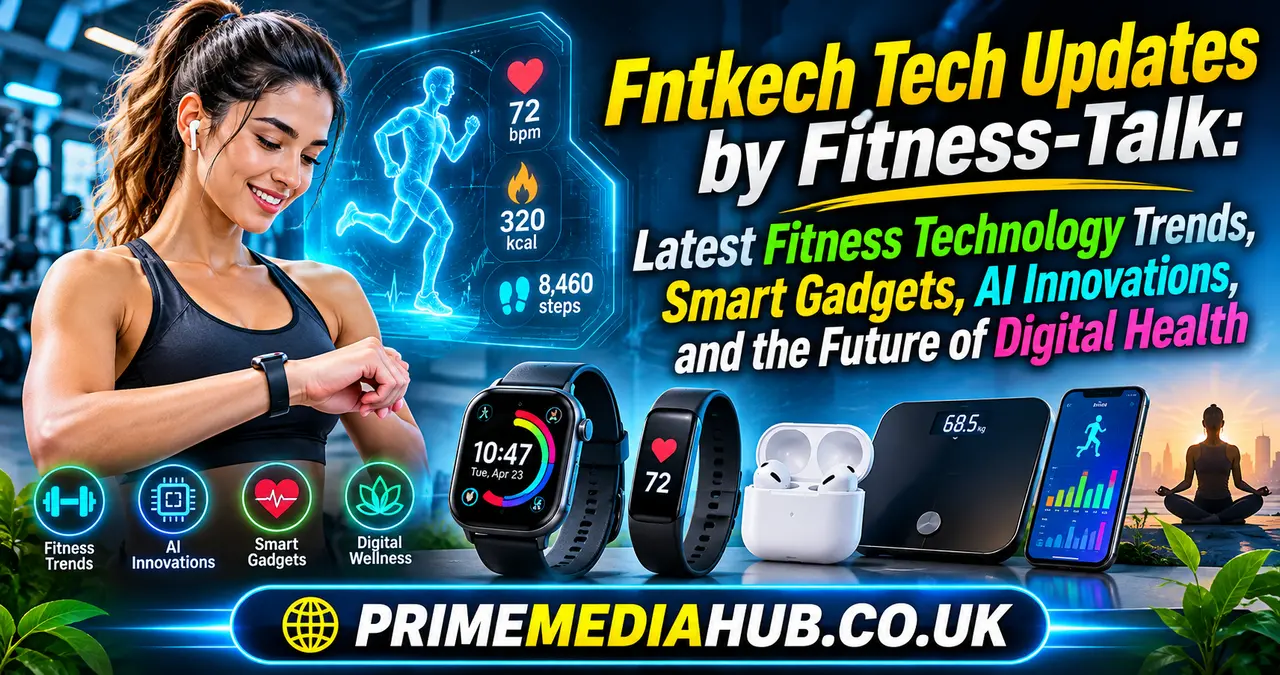
Technology is changing almost every aspect of modern life, and the fitness industry is experiencing one of its biggest transformations. From intelligent fitness trackers and AI-powered workout applications to advanced health monitoring devices, digital innovation is making it easier for people to understand their bodies, improve their performance, and maintain healthier lifestyles. Keeping up with these developments is no longer just an option for technology enthusiasts; it is becoming increasingly important for anyone interested in fitness, wellness, and personal health.
This is where fntkech tech updates by fitness-talk becomes an interesting topic for people who want to explore the connection between technology and physical well-being. It represents a growing interest in understanding how modern technology can support exercise routines, improve health awareness, and make fitness more accessible to different age groups and experience levels.
Today’s fitness technology goes far beyond counting daily steps. Modern devices can monitor heart rate, estimate sleep patterns, track physical activity, and provide insights that help users make more informed lifestyle decisions. Meanwhile, artificial intelligence and connected applications are introducing new possibilities for personalized training and digital health management.
Understanding these developments can help beginners choose the right tools and allow experienced athletes to make better use of the technology available to them. Let’s explore the innovations, practical applications, and important trends shaping the future of fitness technology.
What Is Fntkech Tech Updates by Fitness-Talk?
Fntkech tech updates by fitness-talk focuses on the intersection of modern technology, fitness innovation, digital wellness, and health-related developments. The central idea is to understand how technological advancements are changing the way people exercise, monitor their health, and approach everyday physical activities.
The fitness industry has evolved significantly over the last decade. Previously, most people depended on traditional gym equipment, printed workout plans, and manual tracking methods. Today, smartphones, wearable devices, online coaching platforms, and intelligent applications offer more convenient ways to organize and monitor fitness routines. Technology has made useful fitness information more accessible, even to people who do not have access to professional training facilities.
Another important aspect is education. New fitness products frequently enter the market, but not every device offers meaningful benefits. Understanding what a product measures, how accurately it works, and whether its features are useful can help consumers avoid unnecessary purchases. This makes technology-focused fitness information particularly valuable.
How Technology Is Transforming the Modern Fitness Industry
Technology has changed the relationship between people and physical exercise. Fitness is no longer limited to visiting a gym at a particular time. Users can follow guided workouts at home, participate in virtual fitness classes, communicate with personal trainers online, and monitor their progress through mobile applications.
One major development is the increasing availability of connected fitness equipment. Smart treadmills, stationary bicycles, digital resistance machines, and interactive workout platforms can record exercise information and provide performance feedback. Some systems also offer virtual classes and personalized training recommendations.
For example, someone training for a 5K running event can use a smartwatch to monitor running distance, pace, heart rate, and recovery patterns. Instead of relying entirely on personal judgment, the runner can review historical performance and identify areas that need improvement.
However, technology should support physical training rather than replace fundamental fitness principles. Proper exercise technique, adequate recovery, balanced nutrition, and consistency remain essential. Digital tools are most effective when they help people follow these principles more intelligently.
Artificial Intelligence and Personalized Fitness Training
Artificial intelligence is becoming an important part of the fitness technology landscape. AI-powered applications can analyze information such as exercise frequency, training history, performance patterns, and personal goals to provide customized recommendations.
Traditional workout programs often follow a fixed structure. Although these plans can be effective, they may not account for individual differences in fitness levels, recovery needs, or available training time. Intelligent applications attempt to address this limitation by adjusting recommendations according to user information.
Consider a beginner who wants to build strength but can only exercise three days per week. A personalized fitness application might suggest a manageable resistance-training schedule, track completed sessions, and recommend gradual increases in exercise difficulty. More advanced users may benefit from performance analysis and training-load insights.
Fntkech tech updates by fitness-talk also highlights why consumers should understand the limitations of AI-based fitness recommendations. Artificial intelligence does not automatically make a workout scientifically accurate or medically appropriate. Recommendations depend on the quality of available information, the application’s design, and the assumptions behind its algorithms.
AI applications should therefore be viewed as supportive tools, not replacements for qualified personal trainers, physiotherapists, or healthcare professionals. Anyone managing a medical condition or recovering from an injury should seek appropriate professional advice before following an unfamiliar training program.
Smart Wearable Devices and Real-Time Health Monitoring
<PRIVATE_PERSON>
Wearable technology is among the most recognizable developments in modern fitness. Smartwatches, fitness bands, and other wearable sensors allow people to monitor different aspects of their daily activity without carrying complicated equipment.
Popular devices from companies such as Apple, Samsung, Garmin, and Fitbit offer features that may include heart-rate monitoring, step counting, workout tracking, sleep estimates, and exercise summaries. Depending on the device, users may also access GPS tracking, blood oxygen estimates, temperature-related measurements, and additional health features.
The biggest advantage of wearable technology is convenience. Instead of recording every workout manually, users can collect information automatically and review their activity over time. This can make it easier to recognize behavioral patterns and establish realistic goals.
However, understanding measurement accuracy is essential. Consumer wearables do not always produce results equivalent to professional medical equipment. Heart-rate readings can vary depending on movement, device placement, skin contact, and sensor quality. Sleep-tracking features also provide estimates rather than a definitive medical assessment.
| Wearable technology | Main purpose | Practical benefit |
|---|---|---|
| Smartwatch | Activity and workout tracking | Monitors daily exercise and performance |
| Fitness band | Steps and activity monitoring | Encourages consistent movement |
| Smart ring | Selected wellness measurements | Provides convenient overnight tracking |
| Heart-rate monitor | Heart-rate measurement | Supports exercise intensity monitoring |
| GPS sports watch | Distance, pace, and route tracking | Helps runners and cyclists evaluate performance |
| Smart body scale | Body-weight and composition estimates | Tracks longer-term changes |
The most useful device is not necessarily the most expensive one. A beginner may need only a reliable fitness band, while a competitive runner might benefit from a specialized GPS watch. Choosing equipment according to actual training requirements is more important than purchasing every available feature.
The Role of Mobile Applications in Digital Fitness
Smartphone applications have made fitness information more accessible than ever. Whether someone wants to lose weight, build muscle, improve cardiovascular endurance, or establish a consistent walking routine, there are applications designed to support different objectives.
Workout applications can provide exercise demonstrations, structured training schedules, timers, progress records, and motivational reminders. Nutrition applications can help users understand their food intake, while meditation and sleep applications support other aspects of overall well-being.
Some applications also connect with wearable devices. This integration allows information from different sources to appear in one dashboard. A user might review daily steps, workout duration, sleep estimates, and exercise history without switching between several platforms.
Fntkech tech updates by fitness-talk encourages a broader understanding of these digital tools. Their real value is not simply the amount of information they collect. It is how effectively they help people turn information into sustainable habits.
For instance, someone who spends most of the day sitting might benefit from an application that sends reminders to stand up or take a short walk. These small interventions can encourage movement throughout the day without requiring an elaborate exercise program.
Nevertheless, users should pay attention to application permissions, subscription costs, privacy policies, and data-sharing settings before connecting personal health information.
Virtual Reality and Augmented Reality in Fitness
Virtual reality and augmented reality are introducing new ways to experience physical exercise. Instead of following conventional workout routines, users can participate in interactive environments that combine movement, entertainment, and digital feedback.
Virtual reality fitness applications can include boxing simulations, rhythm-based workouts, cycling experiences, and interactive movement challenges. These experiences can make repetitive physical activity more engaging, particularly for individuals who struggle with traditional exercise routines.
Augmented reality works differently. Rather than completely replacing the user’s surroundings, it overlays digital information onto the real environment. This technology has potential applications in exercise instruction, movement guidance, and interactive training experiences.
Imagine a person learning a new exercise at home. An augmented reality system could display visual guidance showing the intended movement pattern. While such technology is still developing, it demonstrates how digital interfaces may improve exercise education.
However, immersive fitness technology has practical limitations. Equipment costs, available space, motion comfort, and user safety should all be considered. Beginners should start with simple activities and ensure that their surroundings are suitable for movement.
Data Privacy and Security in Fitness Technology
As fitness devices collect increasingly detailed personal information, data privacy has become an important concern. Many modern applications store activity records, health measurements, location information, and personal account details.
Although this information can improve user experiences, it also creates responsibilities for technology companies and consumers. Personal health information should be handled carefully, and users should understand what information their devices collect and where it is stored.
Before purchasing a wearable device or installing a fitness application, review its privacy policy. Check whether the application shares information with third parties, whether location tracking is necessary, and whether users can control or delete their stored information.
Fntkech tech updates by fitness-talk is relevant to this discussion because fitness innovation should not be evaluated through features alone. Security, transparency, reliability, and responsible data management are equally important considerations.
Using strong passwords, enabling available account security features, keeping applications updated, and limiting unnecessary permissions can reduce some common digital security risks.
Fitness Technology for Beginners and Professional Athletes
Fitness technology serves different purposes depending on a person’s experience and objectives. Beginners generally need simple tools that make physical activity easier to understand and maintain. Professional athletes, on the other hand, may require more advanced performance measurements and detailed training analysis.
For beginners, a basic activity tracker can help establish daily movement goals. A free or affordable workout application can provide exercise demonstrations and help organize a weekly routine. These tools are usually sufficient for developing consistency without overwhelming the user with unnecessary data.
Experienced athletes may use GPS watches, chest-strap heart-rate monitors, specialized cycling computers, and performance-analysis platforms. These devices can provide information about training intensity, pace, distance, and other performance indicators.
The important distinction is between collecting information and using it effectively. Recording dozens of measurements does not automatically improve fitness. Athletes need to interpret relevant information and connect it with training objectives.
A recreational runner, for example, may benefit more from consistently monitoring weekly running distance and recovery than from studying every available performance metric. Similarly, someone interested in strength training may gain more value from recording exercises, sets, repetitions, and progressive increases in resistance.
The Importance of Sleep, Recovery, and Digital Wellness
One of the most valuable developments in modern fitness technology is the growing attention given to recovery. Exercise performance depends not only on physical effort but also on adequate rest, nutrition, and recovery between training sessions.
Many wearable devices now provide sleep-duration estimates, nighttime movement information, and recovery-related indicators. Some applications combine these measurements with training history to offer general suggestions about exercise intensity.
For example, an individual who regularly performs demanding workouts without sufficient rest may experience fatigue and declining performance. Tracking sleep habits and workout frequency can help identify patterns that deserve attention.
However, recovery scores should not be treated as medical diagnoses. They are estimates based on particular measurements and algorithms. Personal feelings, physical symptoms, training experience, and professional guidance remain important.
The World Health Organization provides useful information about physical activity recommendations, including guidance for adults and different age groups. Readers can explore its official resource here: WHO – Physical Activity.
A practical approach is to combine technology with healthy daily routines. Regular movement, sufficient sleep, balanced nutrition, hydration, and appropriate recovery remain the foundation of long-term well-being.
Emerging Fitness Technology Trends to Watch
The next generation of fitness technology is likely to focus increasingly on personalization, connectivity, accessibility, and preventive health awareness. Several developments already indicate where the industry may be heading.
One important trend is the expansion of connected health ecosystems. Instead of relying on individual devices, consumers are increasingly interested in products that work together. Smartwatches, fitness applications, digital scales, and health platforms may share selected information to create a more complete picture of daily activity.
Another emerging area involves non-invasive health monitoring. Researchers and technology companies continue exploring ways to measure different physiological signals through wearable sensors. Although some capabilities remain experimental or limited, future improvements could make health monitoring more convenient.
Smart clothing is another interesting development. Some specialized garments incorporate sensors designed to measure movement, posture, or selected physiological information. Such products may eventually become more useful in sports training and rehabilitation.
Fntkech tech updates by fitness-talk provides a useful framework for examining these developments because understanding a trend requires more than recognizing a new product. Consumers should consider whether the technology solves a real problem, offers reliable measurements, and provides benefits that justify its cost.
| Emerging trend | Potential application | Current consideration |
|---|---|---|
| AI fitness coaching | Personalized workout guidance | Recommendations require careful evaluation |
| Smart clothing | Movement and physiological monitoring | Availability and accuracy vary |
| Connected health platforms | Combined activity information | Privacy and compatibility matter |
| VR fitness | Interactive exercise experiences | Equipment and space requirements |
| Advanced wearables | Expanded health-related measurements | Not all features are medically validated |
| Digital rehabilitation | Guided recovery exercises | Professional supervision may be necessary |
These innovations offer exciting possibilities, but consumers should distinguish between established features and technologies that are still being developed.
How to Choose the Right Fitness Technology
Choosing the right fitness technology begins with identifying a specific goal. Someone who wants to walk more regularly does not need the same equipment as a competitive cyclist or professional strength athlete.
Start by considering which information would genuinely improve your routine. If your main objective is increasing daily activity, a simple step tracker may be sufficient. If you enjoy outdoor running, GPS tracking and reliable heart-rate measurements might be more useful.
Budget is another important consideration. Expensive devices frequently include advanced features that many users never use. Before making a purchase, compare battery life, compatibility, comfort, subscription requirements, warranty coverage, and available customer support.
It is also worth checking whether a device works with your existing smartphone. Some products offer their best functionality within specific operating systems or brand ecosystems. Compatibility problems can reduce the practical value of an otherwise impressive device.
Finally, avoid becoming overly dependent on numerical targets. Fitness technology should encourage healthier behavior rather than create unnecessary pressure. Missing a daily step goal does not mean that a person’s entire fitness routine has failed.
The best technology is the technology that fits naturally into everyday life and encourages sustainable improvements.
Why Reliable Fitness Technology Information Matters
The rapid growth of the fitness technology market has created an enormous amount of online information. Product announcements, influencer recommendations, technical reviews, and health-related claims appear across numerous websites and social media platforms.
Unfortunately, not every claim is equally reliable. Some advertisements exaggerate the capabilities of wearable devices, while certain applications make promises that are not supported by sufficient scientific evidence.
Readers should develop the habit of checking product specifications, independent reviews, manufacturer documentation, and reputable health resources. When information involves medical conditions, treatment decisions, or diagnostic measurements, professional medical guidance is particularly important.
Fntkech tech updates by fitness-talk can be approached as a technology-focused information topic where the emphasis should remain on practical value, responsible innovation, and informed decision-making.
A useful question to ask about any new fitness product is simple: Does this technology help solve a genuine problem, or does it simply introduce another feature that looks impressive?
This distinction helps consumers make smarter decisions and prevents unnecessary spending. It also encourages a healthier relationship with technology, where digital tools support personal goals instead of becoming the main focus.
Conclusion: The Future of Fitness and Technology
Fitness technology is changing how people exercise, monitor daily activity, and understand personal wellness. Smart wearables, AI-powered applications, connected equipment, virtual reality workouts, and advanced monitoring systems are creating opportunities for more personalized and accessible fitness experiences.
Fntkech tech updates by fitness-talk reflects the growing importance of staying informed about these developments. Understanding new technologies allows consumers to identify useful innovations, evaluate product limitations, and make better decisions about their health and fitness routines.
However, technology alone cannot guarantee better health. Consistent physical activity, balanced nutrition, quality sleep, recovery, and professional guidance when needed remain essential. Digital tools should complement these habits rather than replace them.
As the fitness industry continues to evolve, the most successful approach will be combining technological convenience with practical knowledge and realistic goals. Whether you are a beginner exploring your first fitness tracker or an experienced athlete analyzing advanced performance data, choosing the right tools can make your fitness journey more informed, organized, and enjoyable.
Ultimately, the future of fitness is not simply about owning smarter devices. It is about using innovation to build healthier habits that last.
Frequently Asked Questions (FAQs)
What Is Fntkech Tech Updates by Fitness-Talk?
Fntkech tech updates by fitness-talk refers to the topic of modern technology developments connected with fitness, exercise, wearable devices, digital health, and wellness applications. It explores how innovations such as artificial intelligence, smartwatches, connected equipment, and mobile applications are changing the fitness experience. The subject is relevant to beginners, professional athletes, fitness enthusiasts, and anyone interested in understanding the relationship between technology and healthier living.
Why Is Fitness Technology Becoming So Popular?
Fitness technology is becoming popular because it makes tracking physical activity and organizing exercise routines more convenient. Wearable devices can monitor selected activity measurements, while mobile applications provide workout instructions, progress records, and reminders. People can also access digital coaching and fitness communities without visiting a traditional gym. These advantages make technology an attractive option for individuals with different schedules, budgets, and fitness objectives.
How Can Smartwatches Improve a Fitness Routine?
Smartwatches can support fitness routines by recording information such as daily steps, workout duration, heart rate, and running distance. Some models also offer sleep estimates, GPS tracking, and activity reminders. Reviewing this information can help users recognize patterns and monitor progress over time. However, smartwatch measurements are estimates and should not replace professional medical equipment or clinical assessments when accurate health information is required.
Is Artificial Intelligence Useful for Personal Fitness Training?
Artificial intelligence can make fitness training more personalized by analyzing information about exercise history, training frequency, and individual goals. Certain applications use this information to recommend workouts, organize training schedules, and suggest adjustments. These features can be particularly useful for people who need structured guidance. Nevertheless, AI recommendations are not always medically or scientifically appropriate for every individual, so professional advice remains important when dealing with injuries or health conditions.
What Are the Most Important Fitness Technology Trends in 2026?
Important fitness technology trends in 2026 include AI-assisted workout planning, connected wearable ecosystems, advanced health monitoring, virtual reality exercise experiences, and more personalized digital wellness platforms. Smart clothing and improvements in wearable sensors are also attracting attention. These developments demonstrate the industry’s movement toward more integrated fitness experiences. Consumers should still evaluate accuracy, privacy, affordability, and real-world usefulness before adopting new products.
Can Beginners Benefit From Fitness Technology?
Yes. Beginners can benefit from simple and affordable technology such as step counters, basic fitness bands, and guided workout applications. These tools can make it easier to establish realistic goals, understand exercise routines, and monitor consistency. Beginners do not need expensive equipment or advanced performance analytics to make progress. Starting with a small number of useful features is generally more practical than trying to monitor every available measurement.
Are Fitness Trackers Accurate?
Fitness trackers can provide useful estimates, but their accuracy varies depending on the device, sensor quality, activity type, and how the device is worn. Step counts and heart-rate measurements may be reasonably useful for general activity monitoring, while calorie-burn estimates and sleep-stage measurements can be less reliable. Users should interpret these readings as general indicators rather than exact medical measurements.
How Does Technology Help People Maintain a Healthy Lifestyle?
Technology can support healthier lifestyles by encouraging regular movement, organizing exercise schedules, tracking selected activity measurements, and making health information easier to access. Applications can also provide reminders and educational resources that encourage consistent habits. However, sustainable lifestyle improvements still depend on personal commitment, balanced nutrition, adequate sleep, and regular physical activity.
Is Fntkech Tech Updates by Fitness-Talk Useful for Fitness Enthusiasts?
Fntkech tech updates by fitness-talk is a relevant topic for fitness enthusiasts who want to understand how modern technology influences exercise and wellness. It connects subjects such as smart wearables, digital coaching, AI applications, connected fitness equipment, and emerging health technologies. Learning about these developments can help readers compare products, understand their limitations, and identify tools that support their individual fitness goals.
What Should I Consider Before Buying a Fitness Tracker?
Before purchasing a fitness tracker, consider your budget, fitness objectives, battery life, measurement features, smartphone compatibility, comfort, and privacy settings. Determine whether you need basic activity tracking or more specialized functions such as GPS and advanced workout monitoring. Reading independent reviews and checking warranty conditions can also help you make a more informed purchasing decision. The best tracker is one that provides useful information without making your fitness routine unnecessarily complicated.
Explore latest insights: WKBNobits