If you have ever gotten a call from an unfamiliar number starting with 470 and wondered who on earth was trying to reach you, you are definitely not alone. The 470 area code has become one of the more recognizable phone prefixes in the southeastern United States, yet plenty of people still scratch their heads when they see it pop up on their caller ID. Maybe you just moved to Georgia and need a new number, maybe you got a strange call and want to know if it is legitimate, or maybe you are just curious about how area codes work in general. Whatever brought you here, this guide is going to walk you through everything connected to the 470 area code in a way that actually makes sense.
Area codes might seem like a boring technical detail buried in the world of telecommunications, but they tell a much bigger story about population growth, technology, and the way we communicate. The 470 area code is a perfect example of this. It did not exist for most of the twentieth century, yet today it is one of the busiest and most widely used codes in the entire state of Georgia. Understanding why that happened, what it means for residents and businesses, and how to make the most of a 470 number can save you time, prevent confusion, and even help you make smarter decisions if you are setting up a phone line yourself.
Throughout this article, we will dig into the origins of the 470 area code, the geography it covers, how it fits into the broader numbering system used across North America, and the practical realities of living with or using this code in daily life. We will also tackle some of the most common questions people have, clear up a few persistent myths, and give you a clear picture of what the future might hold for this corner of the telephone numbering map. By the end, you will have a genuinely thorough understanding of the 470 area code, not just a surface-level definition.
What Exactly Is the 470 Area Code and Where Did It Come From
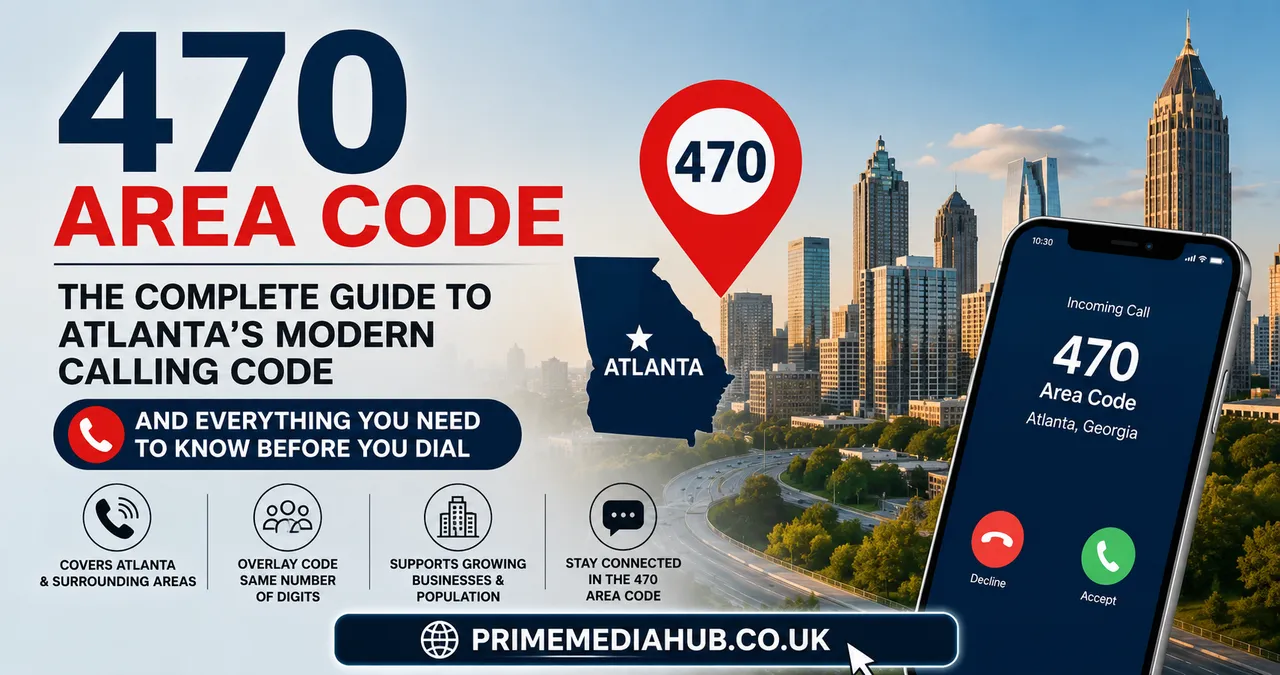
The 470 area code is an overlay code that serves the greater Atlanta metropolitan area in the state of Georgia. Unlike area codes that get tied to a brand-new geographic region, an overlay code shares the exact same physical footprint as one or more existing codes. In this case, 470 overlays the territory already served by the 404, 678, and 770 area codes. That means if you live in downtown Atlanta or out in the suburbs of Cobb, Gwinnett, or Fulton counties, you could be assigned a number starting with any of these four prefixes depending on when you signed up for service and which carrier issued your number.
The reason 470 came into existence is simple math. Phone numbers are a finite resource, even though it might not feel that way in an age where almost everyone carries a smartphone, runs a home office line, has a fax number for old paperwork, and maybe even keeps a separate number for a small business or side hustle. Every single one of those connections needs a unique ten-digit combination, and a single area code can only support a limited number of these combinations before it runs out. Atlanta’s population boomed dramatically over the past few decades, fueled by corporate relocations, a thriving film and entertainment industry, and a steady stream of newcomers drawn by job opportunities and a lower cost of living compared to other major cities. All of that growth meant phone numbers were getting used up fast.
The North American Numbering Plan Administrator, often shortened to NANPA, is the organization responsible for monitoring number supply across the United States, Canada, and several Caribbean nations. When NANPA’s projections showed that the existing codes serving Atlanta were heading toward exhaustion, regulators approved the introduction of the 470 area code to relieve the pressure. It officially went into service in 2013, making it one of the more recent additions to the numbering plan in Georgia. Since then, it has steadily become a normal and expected part of life for anyone getting a new phone line in the region.
It is worth pointing out that the 470 area code did not replace anything. Nobody woke up one day and had their existing 404 or 770 number forcibly changed. Instead, the new code was simply layered on top of the same geographic area, meaning new numbers issued from that point forward could come from any of the four overlapping codes. This approach, called an overlay, has become the standard method for expanding number capacity in a region rather than the older method of splitting a region into two physically separate zones with different codes.
The Geographic Footprint Covered by the 470 Area Code
When people ask which cities fall under the 470 area code, the honest answer is that it covers an enormous and densely populated swath of north-central Georgia. The core of this territory is Atlanta itself, but the boundaries stretch far beyond the city limits to include a huge collection of suburbs, satellite cities, and rapidly growing communities that have become part of the broader Atlanta metro identity. If you are trying to picture the area on a map, imagine a wide circle radiating outward from the city center, capturing dozens of municipalities along the way.
Some of the more recognizable cities and towns within this coverage zone include Marietta, Decatur, Sandy Springs, Roswell, Alpharetta, Smyrna, Dunwoody, Lawrenceville, Stone Mountain, and Duluth. These are not small, sleepy towns either. Many of them have their own thriving downtown districts, growing business parks, and populations in the tens or even hundreds of thousands. Counties such as Fulton, DeKalb, Cobb, Gwinnett, Clayton, and Douglas all fall within the reach of this overlay system, which gives you a sense of just how vast the geographic scope really is.
The table below offers a quick snapshot of some of the key counties and representative cities that share the 470 area code overlay alongside 404, 678, and 770. This is not an exhaustive list of every single town in the region, but it gives a strong sense of the scale involved.
| County | Representative Cities | Approximate Population Context |
|---|---|---|
| Fulton County | Atlanta, Sandy Springs, Alpharetta | Over one million residents |
| Cobb County | Marietta, Smyrna, Kennesaw | Roughly 760,000 residents |
| Gwinnett County | Lawrenceville, Duluth, Snellville | Over 950,000 residents |
| DeKalb County | Decatur, Stone Mountain, Dunwoody | Around 760,000 residents |
| Clayton County | Jonesboro, Forest Park, Riverdale | Approximately 290,000 residents |
| Douglas County | Douglasville, Villa Rica | Around 150,000 residents |
What makes this geographic spread so interesting is that it essentially mirrors one of the largest and most economically significant metropolitan regions in the entire southeastern United States. Atlanta has long served as a hub for commerce, transportation, and culture in the South, and the expansion of its area codes reflects just how much that role has intensified. The Hartsfield-Jackson Atlanta International Airport alone, often cited as one of the busiest airports in the world by passenger traffic, is a testament to how much movement and activity flows through this region on a daily basis.
Because the 470 area code overlays such a wide and diverse territory, it is genuinely impossible to tell exactly where someone lives or works just by looking at their phone number anymore. A person with a 470 number could be sitting in a high-rise office in downtown Atlanta, working from a home in suburban Alpharetta, or running a small shop in Stone Mountain. This blurring of geographic specificity is actually a broader trend happening across the country as overlay codes become more common, and it is something we will revisit later in this guide.
How Overlay Area Codes Work and Why 470 Took This Approach
To really understand the 470 area code, it helps to step back and look at the two main strategies regulators use when a region needs more phone numbers. The first strategy, historically more common, is called a geographic split. This involves taking an existing area and literally dividing it in half, assigning the original area code to one half and a brand-new code to the other half. Anyone living in the newly designated half has to start using the new code for all future numbers, although existing numbers in many cases get to keep their original prefix through a transition period.
The second strategy, and the one used for 470, is the overlay method. Instead of splitting the territory, regulators simply layer a brand-new area code on top of the existing one, covering the exact same geographic footprint. New phone numbers issued after a certain date pull from the new code, while everyone with an existing number keeps using their original prefix indefinitely. Nobody has to change their number, and no physical boundary lines get redrawn.
The overlay approach has become the preferred method nationwide for a few very practical reasons. Geographic splits, while simple in concept, create significant headaches in execution. They require redrawing lines through municipalities, sometimes splitting a single city or even a single street down the middle into two different codes. Businesses on opposite sides of that line might end up with different prefixes despite being neighbors, which creates confusion for customers and forces companies to print new marketing materials, update signage, and notify clients of changes. Overlays eliminate almost all of that disruption because the geographic boundary never moves.
One important side effect of the overlay system, and something that catches a lot of new Atlanta residents off guard, is the requirement to dial ten digits for every single local call, even when calling someone just down the street. In areas with only one area code, people often grow accustomed to dialing just seven digits for local calls, dropping the area code entirely since it was assumed. Once an overlay code gets introduced, that assumption breaks down completely because the phone system has no way of knowing which area code a seven-digit number belongs to. As a direct result, ten-digit dialing became mandatory across the entire 404, 470, 678, and 770 coverage zone. This is now standard practice and most residents have fully adjusted to it, but it remains one of the most noticeable everyday consequences of having an overlay code introduced into a region.
As telecommunications analyst Howard Marsh once put it in an industry discussion about numbering plan changes, “Overlay codes solve the supply problem without forcing an entire community to renumber itself, but the tradeoff is that everyone has to relearn a small habit they probably never thought twice about, like always including the area code.” That tradeoff has proven to be a fair one in most overlay regions, and Atlanta is no exception. The minor inconvenience of dialing three extra digits is a small price to pay compared to the chaos of a full geographic split affecting millions of residents.
A Closer Look at the History Behind Atlanta’s Telephone Numbering Story
Atlanta’s relationship with area codes goes back much further than most people realize, and tracing that history gives valuable context for understanding why 470 exists today. The original area code assigned to the entire state of Georgia, back when the North American Numbering Plan was first established in the 1940s, was 404. At the time, this single code covered the whole state, which made sense given the relatively modest population and the limited number of phone lines in service compared to today’s standards.
As Georgia’s population grew throughout the latter half of the twentieth century, the 404 area code gradually shrank in geographic scope through a series of splits. By the 1990s, Atlanta’s explosive suburban growth had become impossible to ignore, and the 404 code, by then covering primarily the city core, was once again approaching its numerical limits. This led to the introduction of the 770 area code in 1995, which took over the surrounding suburban counties while the city center retained 404.
Even that split did not provide enough breathing room for long. The suburban explosion around Atlanta continued at a remarkable pace through the late 1990s and early 2000s, fueled by corporate headquarters relocating to the region, a booming construction industry, and the kind of sprawling development that turned once-rural counties into bustling commuter communities almost overnight. By 1998, regulators introduced 678 as the first overlay code for the Atlanta region, layering it on top of both 404 and 770 rather than carving out yet another geographic split. This was a significant moment because it represented a shift in strategy toward the overlay method that would later be used again for 470.
Despite the introduction of 678, the relentless pace of growth in metro Atlanta meant that even three area codes combined were not enough to keep up with demand for very long. Population projections released by NANPA in the early 2010s indicated that the supply of available numbers across 404, 678, and 770 would be exhausted within just a few years. This triggered the planning process that ultimately led to the 470 area code launching in 2013, becoming the fourth area code layered onto the exact same geographic territory.
This layered history, moving from a single statewide code to four overlapping codes covering one metro area, is a vivid illustration of just how much Atlanta has grown. Few cities in the country have needed to add this many area codes to a single overlapping region, and the pattern reflects Atlanta’s status as one of the fastest growing major metropolitan areas in the entire nation for several consecutive decades.
Why Businesses Care So Much About Having a 470 Area Code
For everyday residents, getting assigned a 470 number is mostly just a matter of timing and carrier policy. But for businesses, the choice and perception of an area code can carry real weight. Local credibility matters enormously in many industries, particularly service-based businesses like plumbing, landscaping, legal consulting, or real estate, where customers often prefer working with someone who feels rooted in their community rather than a distant call center.
A 470 area code signals an Atlanta-area presence just as clearly as 404, 678, or 770 would, since all four codes share identical territory. Savvy business owners understand that customers rarely distinguish between these four prefixes when deciding whether a company feels local. What matters more is that the number begins with a recognized Atlanta-area code at all, rather than an out-of-state or toll-free number that might create distance between the business and the customer. This is why many companies setting up new phone lines in the region are perfectly happy to receive a 470 number rather than feeling like they got a lesser option compared to the more historic 404.
There is also a practical financial angle here. Acquiring a vanity number or a highly desirable combination of digits within the 470 area code can sometimes be easier and more affordable than trying to secure a similar pattern in the more saturated 404 code, simply because 470 is newer and has more available combinations remaining. Businesses looking for memorable numbers, perhaps something that spells out a word on the keypad or includes a repeating digit pattern, often find more flexibility within the 470 prefix precisely because it has not been as heavily mined for these patterns as older codes.
Marketing consultant Renee Castillo, who has worked with several small businesses across the Atlanta suburbs, shared an observation that captures this sentiment well: “Clients used to ask me if a 470 number looked less established than a 404 number, but honestly, most customers have no idea which code is older. What they care about is whether the number feels local and whether someone picks up the phone when they call.” This kind of practical, customer-focused perspective has helped ease any lingering hesitation business owners might have had about accepting a 470 number instead of holding out for one of the older codes.
Beyond perception, there is also the simple matter of availability. As 404 and even 770 continue approaching their own limits in certain rate centers, new business lines are increasingly likely to be assigned 470 or 678 numbers by default. Rather than fighting this trend, most forward-thinking companies have simply embraced it, recognizing that customers care far more about service quality, responsiveness, and reputation than they do about the specific three digits at the front of a phone number.
Common Myths and Misunderstandings About the 470 Area Code
Misinformation tends to spread quickly around newer area codes, and 470 has certainly attracted its share of myths over the years. One particularly persistent rumor suggests that numbers starting with 470 are somehow more likely to be associated with scam calls or robocalls compared to older, more established area codes. This claim does not hold up under scrutiny. Scammers and robocall operations use number-spoofing technology that can display virtually any area code they want, regardless of where the call is actually originating from. A scammer is just as capable of spoofing a 404 number as they are a 470 number, which means the area code itself tells you nothing meaningful about whether a call is legitimate or fraudulent.
Another misconception is that 470 numbers are somehow temporary or less permanent than other area codes, perhaps assigned only to prepaid phones or short-term service plans. This is simply not true. A 470 number functions exactly the same way as a 404, 678, or 770 number in every technical and practical sense. It can be ported between carriers, kept for life, used for landlines, mobile phones, or VoIP services, and treated with the same permanence as any other number in the North American Numbering Plan. There is no inherent expiration date or reduced functionality tied to this particular code.
Some people also assume that because 470 is the newest of the four overlapping codes, it must be reserved exclusively for cell phones rather than traditional landlines. While it is true that a large percentage of newly issued numbers in any area code today end up going to mobile devices simply because that reflects current consumer habits, there is nothing about the 470 code itself that restricts it to mobile use. Landline providers, business phone systems, and VoIP services can all be assigned numbers from the 470 block just as easily as from any other code serving the region.
A final myth worth addressing involves the idea that having a 470 number somehow makes a call more expensive or subject to different billing rules than calls to or from 404, 678, or 770 numbers. Since all four codes occupy the same geographic footprint and the same local calling area, billing treats them identically. A call between two numbers in this overlay region, regardless of which of the four codes either number uses, is treated as a local call under the same rate structures that would apply if both numbers shared the exact same prefix. There is no hidden surcharge or special long-distance classification tied to the newer code.
How to Get a 470 Number for Yourself or Your Business
If you are interested in obtaining a 470 area code number, the process is fairly straightforward and mirrors how you would get a number in any other area code these days. The most common path is simply signing up for new phone service, whether that is a traditional landline, a mobile plan, or a VoIP business solution, with a provider that operates in the Atlanta metro region. When you request a new number without specifying a particular area code, providers will typically assign whatever is next available in their inventory for that geographic region, which increasingly means a 470 number given how much of the 404 and 678 supply has already been allocated.
For those who specifically want a 470 number rather than leaving it up to chance, most major carriers and VoIP providers allow you to filter or request a specific area code during the sign-up process. Mobile carriers like the major national providers usually offer a search tool where you can browse available numbers by area code, letting you pick from a list of options that start with 470 if that is your preference. VoIP-based business phone systems are often even more flexible, frequently allowing you to choose not just the area code but also search for specific digit patterns within that code, which can be useful if you are trying to create a memorable or brandable phone number for marketing purposes.
It is also entirely possible to port an existing 470 number from one carrier to another if you decide to switch providers down the line. Number portability has been a long-standing consumer protection in the United States telecommunications industry, ensuring that you are never forced to give up a phone number you have grown attached to simply because you want better service, lower rates, or different features from a new carrier. This applies just as fully to 470 numbers as it does to any other area code.
For people relocating into the Atlanta area from elsewhere in the country, there is sometimes a temptation to keep an out-of-state number rather than switching to a local 470, 404, 678, or 770 number. While this is perfectly legal and increasingly common given how much communication happens through mobile devices rather than fixed landlines, some find that switching to a local number makes everyday life slightly easier, particularly when dealing with local businesses, government offices, or service providers who might display unfamiliar long-distance area codes with a bit of suspicion. There is no strict requirement either way, and the decision really comes down to personal preference and how much you value having a number that visually signals your new home base.
The Role of VoIP and Virtual Numbers in the 470 Landscape
The rise of Voice over Internet Protocol technology, commonly known as VoIP, has dramatically changed how people think about area codes in general, and the 470 area code is a great case study for this shift. Traditionally, your area code was tied directly to your physical location because phone numbers were assigned based on the wired infrastructure connecting your home or business to the local telephone network. With VoIP, calls travel over the internet rather than through traditional copper wiring, which means the connection between a phone number and a specific physical address has become much looser.
This has led to an interesting phenomenon where people who have never set foot in Georgia can still acquire a 470 number through a VoIP provider, often for business purposes. A company based in another state entirely might choose to set up a virtual phone line with a 470 area code specifically because they want to project a local presence to customers in the Atlanta market, even though their actual call center or headquarters is located somewhere else entirely. This practice has become increasingly common among businesses that operate across multiple regions and want a localized contact number for each market they serve without maintaining physical offices everywhere.
For consumers, VoIP has also made it easier to keep a 470 number even after moving away from Georgia. Someone who lived in Atlanta for several years and built up a personal or professional network around their 470 number can often retain that number through a VoIP service even after relocating to another state or country, simply by porting their number into a VoIP platform that does not require a physical address in the original area code’s territory. This flexibility has made the rigid geographic logic of area codes feel less important than it once was, even though the codes themselves continue to exist and serve their original administrative purpose within the numbering plan.
Tech writer Devon Okafor touched on this exact shift in a piece discussing modern telecommunications trends, noting that “the area code used to tell you almost everything about where someone lived, but in an internet-connected world, it has become more of a stylistic choice than a geographic certainty.” This observation rings particularly true for newer overlay codes like 470, which already lacked the decades of cultural association that older codes like 404 built up over time, making it an even more natural fit for this more flexible, location-independent way of thinking about phone numbers.
Comparing 470 to the Other Atlanta Area Codes
Since 470 shares its entire territory with 404, 678, and 770, a natural question that comes up is whether there are any meaningful differences between these four codes beyond just the digits themselves. Functionally, the answer is no. All four codes operate under identical rules for billing, dialing, number portability, and service availability. A call from a 470 number to a 404 number within the overlay region is treated exactly the same as a call between two 404 numbers or two 470 numbers, with no special charges or restrictions tied to crossing between the different prefixes.
Where the codes do differ slightly is in cultural perception and historical association, even though these differences are fading over time as more people become accustomed to the overlay system. The 404 area code carries a certain legacy status simply because it was the original code assigned to the entire state and has been associated with Atlanta for the longest period. Some longtime residents and businesses still view 404 numbers as carrying a bit more prestige or nostalgia, similar to how certain area codes in cities like New York or Los Angeles have become culturally significant beyond their purely functional role.
The 678 area code, introduced in 1998, occupies an interesting middle ground. It has been around long enough to feel thoroughly normal and unremarkable to most residents, yet it does not carry quite the same historical weight as 404. Many people who have lived in the Atlanta suburbs for fifteen or twenty years have phone numbers starting with 678 and think nothing of it, viewing it as simply another standard Atlanta-area prefix rather than anything notably different from 404.
The 770 area code holds a similar position, having served the suburban counties since 1995 and becoming deeply embedded in the identity of communities like Marietta, Roswell, and Alpharetta long before 470 or even 678 arrived on the scene. For many suburban Atlanta residents who have lived in the same area for decades, 770 feels just as authentically local as 404 does for city dwellers, even though it was technically the newer code at the time of its introduction.
This brings us back to 470, which remains the newest entrant and therefore has had the least time to build up any particular cultural identity. For now, it largely functions as a neutral, modern option that simply indicates someone got their number relatively recently rather than carrying any specific connotation about where exactly within the metro area they live or work. As more time passes and more people grow up with 470 as a completely normal part of their phone number landscape, this perception gap between the four codes will likely continue to narrow even further.
What Ten-Digit Dialing Means for Everyday Life in the 470 Region
One of the most tangible everyday impacts of the 470 area code’s introduction is the mandatory shift to ten-digit dialing for all local calls within the overlay region. Before 470 arrived, many residents had grown comfortable dialing just seven digits for calls within their immediate area, since the system could safely assume the area code based on the caller’s own location. Once a fourth code entered the mix, that assumption broke down entirely, since a seven-digit number alone could theoretically belong to any of the four overlapping codes.
This change required a noticeable adjustment period for residents who had spent years, sometimes decades, dialing local numbers the shorter way out of pure habit. Telecommunications regulators and local carriers ran public awareness campaigns leading up to the full transition, reminding residents that they would need to start including the area code on every single call, even calls to next-door neighbors or local businesses just a few blocks away. For younger residents and anyone who grew up primarily using mobile phones, where contacts are typically saved with the full ten-digit number anyway, this transition barely registered as a change at all. For older residents accustomed to landline habits formed decades earlier, it took a bit more conscious effort to retrain the muscle memory.
Beyond the dialing habit itself, ten-digit dialing also affects how people format and share phone numbers in writing. Business cards, websites, and printed directories throughout the Atlanta metro area have largely standardized on always displaying the full area code alongside the local number, rather than assuming readers will know to add it themselves. This has actually had a small positive side effect of making contact information clearer and less ambiguous overall, since nobody has to guess which area code applies when looking at a business card or flyer.
Emergency services and other critical systems also had to adjust their internal processes to account for ten-digit dialing becoming the norm. While calling 911 itself remains a simple three-digit process unaffected by any of these changes, many automated systems, call routing services, and administrative phone trees needed updates to ensure they could properly handle the expanded dialing requirements across the four overlapping codes. These behind-the-scenes adjustments mostly happened seamlessly from the perspective of everyday residents, but they represented a substantial undertaking for the telecommunications infrastructure supporting the entire region.
The Economic and Demographic Forces Driving Demand for New Numbers
Understanding why the 470 area code became necessary requires looking beyond just raw population figures and into the specific economic forces that have shaped metro Atlanta over the past several decades. Atlanta has positioned itself as a major logistics and transportation hub, partly thanks to its central location within the southeastern United States and partly because of the aforementioned Hartsfield-Jackson airport, which connects the city to destinations across the globe. This logistical advantage has attracted corporate headquarters, regional offices, and distribution centers from countless industries, each bringing with them employees who need phone service, whether for work or personal use.
The film and television production industry has also exploded in Georgia over the past fifteen years, largely driven by generous state tax incentives that have made the region an attractive alternative to traditional production hubs like Los Angeles. This growth has brought not just temporary production crews but also permanent infrastructure investments, including studio facilities, equipment rental companies, and a growing pool of local talent who have chosen to settle in the area long-term. Every new resident drawn by this industry represents additional demand for phone numbers, contributing incrementally to the pressure that ultimately necessitated the 470 area code.
Beyond specific industries, Atlanta has simply benefited from broader demographic shifts happening across the United States, including a general population movement toward Sun Belt states with warmer climates and lower costs of living compared to traditional population centers in the Northeast and Midwest. Many of these newcomers are not just individuals but entire families and even multi-generational households relocating together, each needing multiple phone lines for various household members, smart home devices, and connected services that increasingly require their own dedicated numbers.
The technology sector has also played a meaningful role, with Atlanta increasingly being recognized as a growing hub for startups and established tech companies looking for an alternative to more saturated and expensive markets like Silicon Valley or Austin. This influx of tech workers, many of whom tend to use multiple phone numbers for work, personal use, and various business ventures, has added yet another layer of demand on top of the already substantial population growth driving the need for additional area codes like 470.
How Carriers and Regulators Plan for Future Number Needs
The introduction of an area code like 470 does not happen overnight or without significant advance planning. Behind the scenes, organizations like NANPA continuously monitor number utilization rates across every area code in the country, generating projections that estimate how many years of supply remain before a given code or set of overlapping codes reaches exhaustion. These projections take into account historical growth trends, known major developments like corporate relocations or large residential construction projects, and broader demographic forecasts for the region in question.
When projections indicate that exhaustion is approaching within a relatively short timeframe, typically within a few years, regulators initiate a formal planning process that involves public notice periods, opportunities for industry stakeholders and consumers to weigh in, and careful coordination with all the carriers operating in the affected region. This process is designed to ensure that the transition to a new area code, whether through a split or an overlay, happens smoothly and with enough advance warning that businesses and consumers can prepare accordingly rather than being caught off guard by sudden changes.
For the 470 area code specifically, this planning process played out over roughly two years before the code officially went into service in 2013. During that window, telecommunications companies operating in the Atlanta region updated their systems to recognize and properly route calls involving the new code, public awareness campaigns explained the upcoming changes to residents, and businesses had time to update their marketing materials and internal systems in anticipation of potentially receiving 470 numbers for new lines.
Looking ahead, similar planning processes will likely need to happen again at some point in the future if growth in metro Atlanta continues at anything close to its historical pace. Industry observers have occasionally speculated about whether a fifth area code might eventually become necessary for the region, though as of now there is no concrete timeline suggesting this will happen imminently. The continued adoption of VoIP services, number pooling efficiencies that allow more granular allocation of number blocks to carriers, and conservation measures implemented by NANPA have all helped extend the usable lifespan of the current four-code overlay system, potentially pushing any future expansion further into the future than might have otherwise been necessary.
Practical Tips for Anyone Dealing with a 470 Number
If you have recently been assigned a 470 number, or if you are dealing with one in some other context, there are a few practical things worth keeping in mind to make the experience as smooth as possible. First and foremost, remember that ten-digit dialing applies universally across the entire overlay region, so always include the area code when dialing, saving contacts, or sharing your number with others, regardless of whether the call is local or long distance.
If you run a business and have been assigned a 470 number, consider embracing it openly in your marketing rather than treating it as something to downplay or hide. As discussed earlier, most customers genuinely do not distinguish between the four overlapping Atlanta codes, and confidently displaying your 470 number on your website, business cards, and storefront signage sends a clear signal that you are an established part of the local business community, regardless of which specific prefix happens to appear on your number.
For those receiving unexpected or unfamiliar calls from 470 numbers, it is worth applying the same general caution you would apply to any unfamiliar number, regardless of area code. If you do not recognize the specific number and were not expecting a call, it is reasonable to let it go to voicemail and call back later if the message seems legitimate, rather than answering immediately. This is simply good practice across all area codes, not something unique to 470, since spoofing technology means area codes alone never tell you whether a call is trustworthy.
If you are moving into the Atlanta metro area and need to set up new phone service, take a few minutes to research providers and their specific number allocation practices before committing. Some providers offer better tools for selecting specific area codes or memorable digit patterns than others, and a little research upfront can save you the hassle of ending up with a number you are unhappy with and having to go through additional steps to change it later. Most reputable carriers and VoIP services make this information readily available either through their websites or customer service representatives, so it rarely takes more than a short conversation to get clarity on your options.
The Cultural Identity Tied to Atlanta’s Phone Numbers
There is something genuinely fascinating about how deeply phone numbers can become woven into local culture and identity, and Atlanta provides a particularly rich example of this phenomenon. The 404 area code, despite no longer being the only option for new numbers in the region, has taken on an almost iconic status within certain circles, frequently referenced in music, local branding, and casual conversation as shorthand for Atlanta itself. Musicians and artists from the city have referenced 404 in lyrics and branding for years, cementing its place as more than just a technical designation.
As newer codes like 678, 770, and now 470 have entered the picture, there has been an interesting cultural negotiation happening in real time about how much, if any, similar identity these newer codes will eventually develop. Some residents have started half-jokingly referring to themselves by whichever code happens to appear on their personal number, creating a kind of informal social shorthand that, while not as deeply entrenched as the 404 association, shows early signs of similar cultural attachment forming around the newer prefixes.
This kind of attachment to area codes is not unique to Atlanta, of course. Cities across the country have similar relationships with their phone prefixes, from the cultural weight carried by certain New York City codes to the way certain Los Angeles area codes have become associated with specific neighborhoods and social identities. What makes Atlanta’s situation particularly interesting is the sheer number of overlapping codes now sharing the exact same territory, creating a uniquely layered situation where four different numerical identities coexist within the same physical and cultural space.
Local business owner and longtime Atlanta resident Marcus Webb offered a thoughtful perspective on this evolving dynamic: “When I tell people I am from the 404, everybody immediately knows what that means and where I am coming from. My nephew has a 470 number, and honestly, give it another decade and that code is going to carry just as much weight. It just needs time to catch up.” This kind of generational perspective captures the ongoing, organic process through which newer area codes gradually earn their own place in the local cultural fabric, even if that process takes considerably longer than the simple act of regulators assigning a new set of digits to the region.
Looking Ahead: The Future of Numbering in Metro Atlanta
Predicting exactly what the future holds for phone numbering in the Atlanta region involves balancing several competing factors, but a few reasonably confident observations can be made based on current trends. Continued population growth in the metro area seems all but certain to continue for at least the foreseeable future, driven by the same economic and demographic forces discussed earlier in this guide. Whether this growth eventually necessitates a fifth overlapping area code depends heavily on how efficiently the existing four-code system gets utilized and how quickly conservation measures and technological shifts offset rising demand.
One factor working in favor of extending the lifespan of the current system is the increasing prevalence of number pooling, a practice where carriers receive smaller, more precisely allocated blocks of numbers rather than the larger blocks historically assigned under older allocation methods. This more efficient distribution reduces waste and helps stretch the available supply of numbers within existing area codes further than would otherwise be possible, potentially delaying the need for any future expansion.
On the other hand, the continued rise of connected devices, smart home technology, and the broader expansion of the so-called internet of things means that demand for unique identifiers, even if not always traditional phone numbers in the classic sense, continues to grow in ways that were difficult to anticipate when the numbering plan was first established decades ago. While many connected devices use different identification systems entirely rather than traditional phone numbers, the overall trend toward more devices needing more unique identifiers across the board suggests that pressure on number supply, broadly speaking, is unlikely to disappear anytime soon.
Whatever happens with future area codes in the region, the 470 area code itself is firmly established as a permanent and fully functional part of Atlanta’s telecommunications landscape. It will continue serving residents, businesses, and visitors throughout the metro area for the foreseeable future, regardless of whether additional codes eventually join the mix. Its story so far offers a clear and genuinely informative window into how modern telecommunications infrastructure adapts to meet the needs of a growing population, balancing technical necessity with the practical realities of everyday life for millions of people across one of the most dynamic metropolitan regions in the country.
The journey from a single statewide area code in the 1940s to four overlapping codes serving one metropolitan region today tells a story far bigger than just telephone infrastructure. It reflects decades of economic transformation, population growth, and technological change that turned Atlanta into the major hub it is today. The 470 area code, as the newest chapter in that story, represents both continuity with everything that came before it and a sign of just how much further this remarkable region still has to grow. Whether you are a longtime resident who remembers when 404 was the only code in town, a newcomer who just received your very first 470 number, or simply someone curious about the mechanics behind modern phone systems, understanding this history offers a genuinely valuable perspective on how interconnected technology, geography, and human growth really are.
Frequently Asked Questions About the 470 Area Code
Is the 470 area code only for Atlanta or does it cover other cities too?
The 470 area code covers the entire greater Atlanta metropolitan region rather than being limited strictly to the city of Atlanta itself. This includes a wide collection of suburbs and satellite communities such as Marietta, Decatur, Alpharetta, Roswell, Sandy Springs, Duluth, and many others spread across counties like Fulton, Cobb, Gwinnett, and DeKalb. Since it overlays the same territory as 404, 678, and 770, any city or town served by those existing codes is also potentially served by 470.
Do I have to pay extra for calling a 470 number compared to other Atlanta area codes?
No, calling a 470 number costs exactly the same as calling a 404, 678, or 770 number within the shared overlay region, assuming both numbers fall within the same local calling area. Since all four codes occupy identical geographic territory, calls between them are treated as local calls under standard billing practices, with no special long-distance charges or surcharges applied simply because the call crosses between different area codes within this overlapping system.
Can I choose to have a 470 area code instead of being assigned one randomly?
In many cases, yes, you can request a 470 area code specifically when signing up for new phone service, whether through a traditional carrier or a VoIP provider. Most companies offer search tools that let you browse available numbers by area code, allowing you to select 470 if that is your preference rather than accepting whatever happens to be assigned by default. Availability of specific number patterns within that code will vary depending on the provider and current inventory.
Why does my phone now require ten digits even for local calls within the 470 region?
Ten-digit dialing became mandatory throughout the entire Atlanta overlay region once the 470 area code was introduced because the telephone system needs the area code to determine exactly which number you are trying to reach. With four different codes now sharing the same geographic footprint, a seven-digit number alone is no longer enough information for the system to route your call correctly, so including the full area code, even for calls to nearby numbers, became a permanent requirement across 404, 470, 678, and 770.
Is a 470 area code number considered less legitimate or professional than older codes like 404?
There is no factual basis for considering a 470 number less legitimate or professional than 404, 678, or 770 numbers, since all four codes function identically and serve the exact same geographic region. Most customers and clients do not distinguish between these prefixes when judging a business or individual, caring far more about responsiveness, service quality, and overall reputation than the specific three digits appearing at the start of a phone number. Plenty of well-established and thriving businesses throughout metro Atlanta operate successfully with 470 numbers without any negative impact on their credibility.